

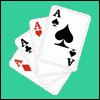
The best card trick?


Time for a little mathemagic! Choose any five cards from a pack and show four of them to your partner. How can they work out the fifth?
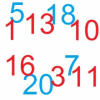
Take three from five
Caroline and James pick sets of five numbers. Charlie tries to find three that add together to make a multiple of three. Can they stop him?
Cyclic quad jigsaw


Seven squares - group-worthy task
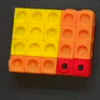
Factorising with multilink
Can you find out what is special about the dimensions of rectangles you can make with squares, sticks and units?
Always a multiple?
Think of a two digit number, reverse the digits, and add the numbers together. Something special happens...

Whirlyball
Method in multiplying madness?
Watch our videos of multiplication methods that you may not have met before. Can you make sense of them?
Symmetric tangles

Ace, two, three...
Can you picture how to order the cards to reproduce Charlie's card trick for yourself?

Twisting and turning
Take a look at the video and try to find a sequence of moves that will untangle the ropes.


Impossible triangles?

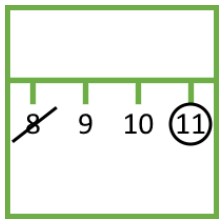
Strike it out
Use your addition and subtraction skills, combined with some strategic thinking, to beat your partner at this game.

Speedy summations
Watch the video to see how to add together an arithmetic sequence of numbers efficiently.
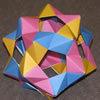
Modular origami polyhedra
These models have appeared around the Centre for Mathematical Sciences. Perhaps you would like to try to make some similar models of your own.

Kingsfield School - building on rich starting points
Alf and Tracy explain how the Kingsfield School maths department use common tasks to encourage all students to think mathematically about key areas in the curriculum.

Drawing Celtic knots
Here is a chance to create some Celtic knots and explore the mathematics behind them.

Turning the place over
How many?
This project challenges you to work out the number of cubes hidden under a cloth. What questions would you like to ask?
Jo Boaler explains complex instruction
A video clip of Jo Boaler talking about Complex Instruction.

Dotty six
Dotty Six is a simple dice game that you can adapt in many ways.

Bryony's triangle
Watch the video to see how to fold a square of paper to create a flower. What fraction of the piece of paper is the small triangle?

Take one example

Constructing triangles
Generate three random numbers to determine the side lengths of a triangle. What triangles can you draw?

James's code challenge