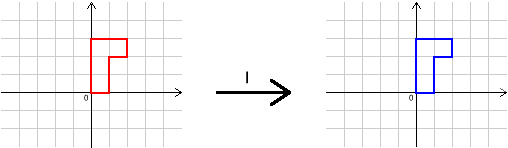
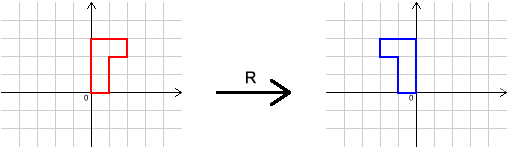
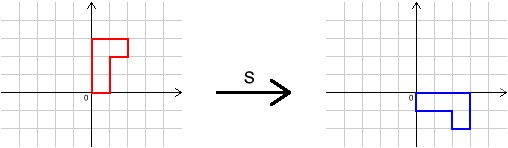
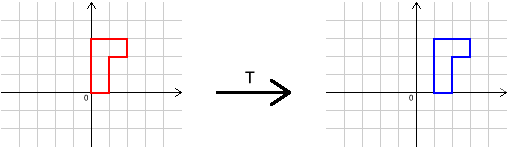
In this problem, we shall use four transformations,
,
,
and
.
Their effects are shown below.
We write
for the transformation that "undoes"
(the inverse of
), and
for "do
, then
".
We can write
followed by
as
or
, and
followed by
followed by
as
or
and so on.
Similarly, we
can write
as
and so on.
Try to find simpler ways to write:
,
,
, ...
,
,
, ...
,
,
, ....
What do you notice?
Can you find a simpler way to write
and
?
Can you describe
?
Let's think about the order in which we carry out transformations:
What
happens if you do
? Do you think that
will be the same? Try it and see.
Is
the same as
?
Is
the same as
?
Try this with some other transformations. Does changing the order
always
sometimes
never
produce the same transformation?
Now let's think about how to undo
. What combination of
,
,
,
and their inverses might work? Try it and see: does it work? If not,
why not? Can you find
a combination of transformations that does work?
How can you undo
transformations like
,
and
?