Siobhan has sent us her work on this
problem. Well done, Siobhan!
The problem says that
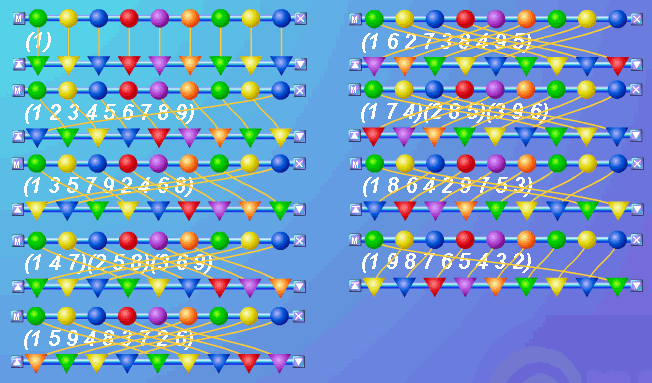
has two cycles, whereas
has one
cycle and
has four cycles. I noticed that in each of these
examples the number of cycles in
is the highest common factor of
and
. I decided to test this on shuffles of lengths
and
.
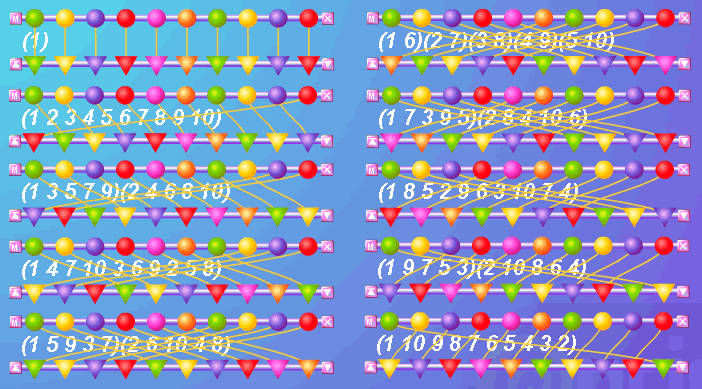
Here are the tables I got:
This agrees with my prediction: the number of cycles in
is
the highest common factor of
and
. (Of course,
really means
so has
cycles.)
In
, consecutive numbers are
apart (
,
,
, ...,
).
When we do this twice, they are two apart, because, for example,
goes
to
which goes to
so
goes to
. When we work out
, the numbers that were
apart become
apart, because, for
example,
goes to
which goes to
so
goes to
. It's quite
easy to see that this will keep happening, because each time we apply
we move the numbers
further apart. So in
the numbers
are
apart. But now we can see that the number of cycles we get will
be the highest common factor of
and
; this is like the Stars problem
mentioned in this question.