(1) The
function can be defined separately where
takes positive
values between
and
(for integer
), that is
in the first two quadrants, and where
takes negative
values between
and
, that is in the third
and fourth quadrants.
The
first derivative:
and the derivative
is not defined at the points
for any integer
.
(2)
implies that
and hence
,
and
.
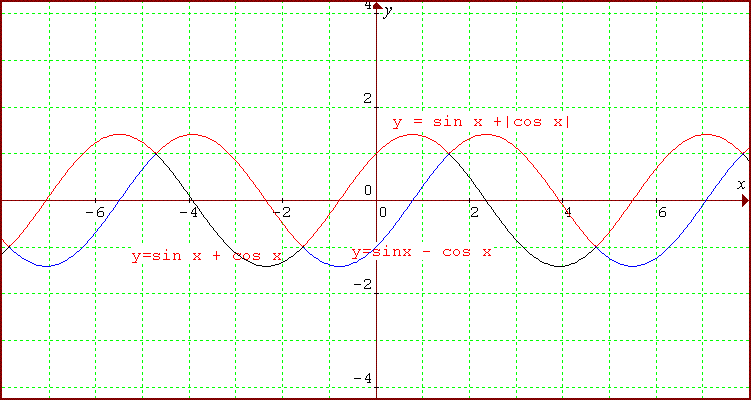
Hence the graph of this function is a sine graph with a phase
shift of
, that is
when
, it takes
the value 1 when
and
and the value -1
when
and
, has maximum values
and minimum values
implies that
and hence
,
and
.
Hence the graph of this function is a sine graph with a phase
shift of
, that is
when
, it
takes the value 1 when
and
, has maximum
values
and minimum values
The
derivative is not defined at
and for other
values of
it is:
.GIF)
.GIF)