 Links to the NRICH website Home page

30 April (Primary), 1 May (Secondary)
Resources tagged with: Biology
There are 69 NRICH Mathematical resources connected to Biology, you may find related items under Cross-curricular contexts.
Broad Topics > Cross-curricular contexts > Biology
Discuss and Choose
This activity challenges you to decide on the 'best' number to use in each statement. You may need to do some estimating, some calculating and some research.



Ratios and Dilutions
Scientists often require solutions which are diluted to a particular concentration. In this problem, you can explore the mathematics of simple dilutions
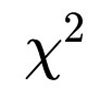
Chi-squared Faker
How would you massage the data in this Chi-squared test to both accept and reject the hypothesis?


Blood Buffers
Investigate the mathematics behind blood buffers and derive the form of a titration curve.

Real-life Equations
Here are several equations from real life. Can you work out which measurements are possible from each equation?

Stats Statements
Are these statistical statements sometimes, always or never true? Or it is impossible to say?

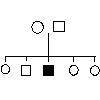

Biology Measurement Challenge
Analyse these beautiful biological images and attempt to rank them in size order.
Maths Is Everywhere!
Maths is everywhere in the world! Take a look at these images. What mathematics can you see?

Bird-brained
How many eggs should a bird lay to maximise the number of chicks that will hatch? An introduction to optimisation.

Alternative Record Book
In which Olympic event does a human travel fastest? Decide which events to include in your Alternative Record Book.

Population Ecology Using Probability
An advanced mathematical exploration supporting our series of articles on population dynamics for advanced students.

Big and Small Numbers in the Living World
Work with numbers big and small to estimate and calculate various quantities in biological contexts.
Population Dynamics - Part 5
Fifth in our series of problems on population dynamics for advanced students.
Population Dynamics - Part 6
Sixth in our series of problems on population dynamics for advanced students.

Branching Processes and Extinction
An advanced mathematical exploration supporting our series of articles on population dynamics for advanced students.
Population Dynamics - Part 4
Fourth in our series of problems on population dynamics for advanced students.
Population Dynamics
This problem opens a major sequence of activities on the mathematics of population dynamics for advanced students.
Population Dynamics - Part 2
Second in our series of problems on population dynamics for advanced students.
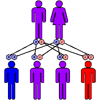
Peas in a Pod
What is the chance this pea plant will look like its parents?
Population Dynamics - Part 3
Third in our series of problems on population dynamics for advanced students.
Is Your DNA Unique?
Use combinatoric probabilities to work out the probability that you are genetically unique!
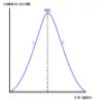
Graphic Biology
Several graphs of the sort occurring commonly in biology are given. How many processes can you map to each graph?

Why Multiply When You're about to Divide?
A brief introduction to PCR and restriction mapping, with relevant calculations...
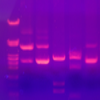
Genetic Intrigue
Dip your toe into the fascinating topic of genetics. From Mendel's theories to some cutting edge experimental techniques, this article gives an insight into some of the processes underlying a fundamental biological discipline.

Predator - Prey Systems
See how differential equations might be used to make a realistic model of a system containing predators and their prey.

Whose Line Graph Is it Anyway?
Which line graph, equations and physical processes go together?

chemNRICH
chemNRICH is the area of the stemNRICH site devoted to the mathematics underlying the study of chemistry, designed to help develop the mathematics required to get the most from your study of chemistry at A-level and university.

Core Scientific Mathematics
This is the area of the advanced stemNRICH site devoted to the core applied mathematics underlying the sciences.

Drug Stabiliser
How does the half-life of a drug affect the build up of medication in the body over time?
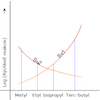
Reaction Types
Explore the rates of growth of the sorts of simple polynomials often used in mathematical modelling.
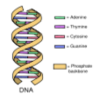
The Genes of Gilgamesh
Can you work out the parentage of the ancient hero Gilgamesh?
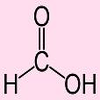
Extreme Dissociation
In this question we push the pH formula to its theoretical limits.

Exact Dilutions
Which exact dilution ratios can you make using only 2 dilutions?
Dilution Series Calculator
Which dilutions can you make using 10ml pipettes and 100ml measuring cylinders?
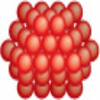
Packing 3D Shapes
What 3D shapes occur in nature. How efficiently can you pack these shapes together?

Fitting Flat Shapes
How efficiently can various flat shapes be fitted together?

Time to Evolve
How many generations would link an evolutionist to a very distant ancestor?

Bio Graphs
What biological growth processes can you fit to these graphs?
Mathematical Issues for Biologists
STEM students at university often encounter mathematical difficulties. This articles highlights the 8 key problems for biologists.
Bigger or Smaller?
When you change the units, do the numbers get bigger or smaller?

Catalyse That!
Can you work out how to produce the right amount of chemical in a temperature-dependent reaction?
Mixed up Mixture
Can you fill in the mixed up numbers in this dilution calculation?

Big and Small Numbers in Biology
Work with numbers big and small to estimate and calulate various quantities in biological contexts.
bioNRICH
bioNRICH is the area of the stemNRICH site devoted to the mathematics underlying the study of the biological sciences, designed to help develop the mathematics required to get the most from your study of biology at A-level and university.