 Links to the NRICH website Home page

30 April (Primary), 1 May (Secondary)
Resources tagged with: Equally likely outcomes
There are 15 NRICH Mathematical resources connected to Equally likely outcomes, you may find related items under Probability.
Broad Topics > Probability > Equally likely outcomes
Which Spinners?
Can you work out which spinners were used to generate the frequency charts?



Connect Three
In this game the winner is the first to complete a row of three. Are some squares easier to land on than others?

Cosy Corner
Six balls are shaken. You win if at least one red ball ends in a corner. What is the probability of winning?

Two's Company
Seven balls are shaken. You win if the two blue balls end up touching. What is the probability of winning?
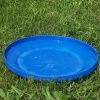
Flippin' Discs
Discs are flipped in the air. You win if all the faces show the same colour. What is the probability of winning?

Teams
Two brothers belong to a club with 10 members. Four are selected for a match. Find the probability that both brothers are selected.
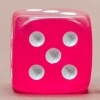
What do you know about Probability? (2)
What are the likelihoods of different events when you roll a dice?

What Do You Know about Probability? (1)
What is special about dice?
How can we use dice to explore probability?
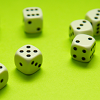
Dicey Dice
Invent a set of three dice where each one is better than one of the others?
Misunderstanding Randomness
Which of these ideas about randomness are actually correct?
Can't Find a Coin?
Can you generate a set of random results? Can you fool the random simulator?

How Many Balls?
A bag contains red and blue balls. You are told the probabilities of drawing certain combinations of balls. Find how many red and how many blue balls there are in the bag.
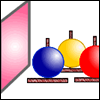
Master Minding
Your partner chooses two beads and places them side by side behind a screen. What is the minimum number of guesses you would need to be sure of guessing the two beads and their positions?
Coin Tossing Games
You and I play a game involving successive throws of a fair coin. Suppose I pick HH and you pick TH. The coin is thrown repeatedly until we see either two heads in a row (I win) or a tail followed by a head (you win). What is the probability that you win?