 Links to the NRICH website Home page

30 April (Primary), 1 May (Secondary)
Resources tagged with: Groups
There are 11 NRICH Mathematical resources connected to Groups, you may find related items under Patterns, sequences and structure.
Broad Topics > Patterns, sequences and structure > Groups
Sheep in Wolf's Clothing
Can you work out what simple structures have been dressed up in these advanced mathematical representations?


Paint Rollers for Frieze Patterns.
Proofs that there are only seven frieze patterns involve complicated group theory. The symmetries of a cylinder provide an easier approach.
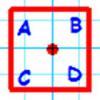
Dancing with Maths
An article for students and teachers on symmetry and square dancing. What do the symmetries of the square have to do with a dos-e-dos or a swing? Find out more?
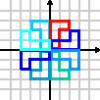
Grouping Transformations
An introduction to groups using transformations, following on from the October 2006 Stage 3 problems.
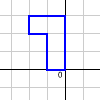
Simplifying Transformations
How many different transformations can you find made up from combinations of R, S and their inverses? Can you be sure that you have found them all?
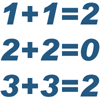
An Introduction to Mathematical Structure
An introduction to the sort of algebra studied at university, focussing on groups.

Groups of Sets
The binary operation * for combining sets is defined as the union of two sets minus their intersection. Prove the set of all subsets of a set S together with the binary operation * forms a group.


What's a Group?
Explore the properties of some groups such as: The set of all real numbers excluding -1 together with the operation x*y = xy + x + y. Find the identity and the inverse of the element x.
An Introduction to Galois Theory
This article only skims the surface of Galois theory and should probably be accessible to a 17 or 18 year old school student with a strong interest in mathematics.
Small Groups
Learn about the rules for a group and the different groups of 4 elements by doing some simple puzzles.