 Links to the NRICH website Home page

30 April (Primary), 1 May (Secondary)
Resources tagged with: Describing patterns and sequences
There are 97 results
Broad Topics > Patterns, sequences and structure > Describing patterns and sequences
Growing Surprises
Can you find the connections between linear and quadratic patterns?



Fibonacci Surprises
Play around with the Fibonacci sequence and discover some surprising results!

Impossibilities
Just because a problem is impossible doesn't mean it's difficult...
Quadratic Patterns
Surprising numerical patterns can be explained using algebra and diagrams...

Beach Huts
Can you figure out how sequences of beach huts are generated?

Circles, Circles
Here are some arrangements of circles. How many circles would I need to make the next size up for each? Can you create your own arrangement and investigate the number of circles it needs?

School Fair Necklaces
How many possible symmetrical necklaces can you find? How do you know you've found them all?

Train Spotters' Paradise
Dave Hewitt suggests that there might be more to mathematics than looking at numerical results, finding patterns and generalising.
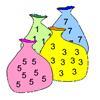
What Numbers Can We Make Now?
Imagine we have four bags containing numbers from a sequence. What numbers can we make now?

Seven Squares
Watch these videos to see how Phoebe, Alice and Luke chose to draw 7 squares. How would they draw 100?

Magic Letters
Charlie has made a Magic V. Can you use his example to make some more? And how about Magic Ls, Ns and Ws?
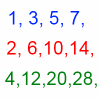
Odds, Evens and More Evens
Alison, Bernard and Charlie have been exploring sequences of odd and even numbers, which raise some intriguing questions...

What Numbers Can We Make?
Imagine we have four bags containing a large number of 1s, 4s, 7s and 10s. What numbers can we make?

Button-up Some More
How many ways can you find to do up all four buttons on my coat? How about if I had five buttons? Six ...?
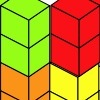
Triple Cubes
This challenge involves eight three-cube models made from interlocking cubes. Investigate different ways of putting the models together then compare your constructions.

Charlie's Delightful Machine
Here is a machine with four coloured lights. Can you develop a strategy to work out the rules controlling each light?

The Numbers Give the Design
Make new patterns from simple turning instructions. You can have a go using pencil and paper or with a floor robot.

Times Tables Shifts
In this activity, the computer chooses a times table and shifts it. Can you work out the table and the shift each time?

Shifting Times Tables
Can you find a way to identify times tables after they have been shifted up or down?

Tower of Hanoi
The Tower of Hanoi is an ancient mathematical challenge. Working on the building blocks may help you to explain the patterns you notice.
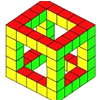
Holes
I've made some cubes and some cubes with holes in. This challenge invites you to explore the difference in the number of small cubes I've used. Can you see any patterns?
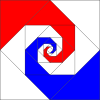
Baravelle
What can you see? What do you notice? What questions can you ask?

Elevenses
How many pairs of numbers can you find that add up to a multiple of 11? Do you notice anything interesting about your results?
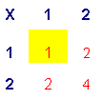
Triangle Numbers
Take a look at the multiplication square. The first eleven triangle numbers have been identified. Can you see a pattern? Does the pattern continue?

Squares in Rectangles
A 2 by 3 rectangle contains 8 squares and a 3 by 4 rectangle contains 20 squares. What size rectangle(s) contain(s) exactly 100 squares? Can you find them all?

Cuisenaire Environment
An environment which simulates working with Cuisenaire rods.

Carrying Cards
These sixteen children are standing in four lines of four, one behind the other. They are each holding a card with a number on it. Can you work out the missing numbers?

Hundred Square
A hundred square has been printed on both sides of a piece of paper. What is on the back of 100? 58? 23? 19?

Coordinate Patterns
Charlie and Alison have been drawing patterns on coordinate grids. Can you picture where the patterns lead?

Seven Squares - Group-worthy Task
Choose a couple of the sequences. Try to picture how to make the next, and the next, and the next... Can you describe your reasoning?
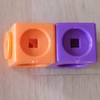
Break it Up!
In how many different ways can you break up a stick of seven interlocking cubes? Now try with a stick of eight cubes and a stick of six cubes. What do you notice?

Picturing Square Numbers
Square numbers can be represented as the sum of consecutive odd numbers. What is the sum of 1 + 3 + ..... + 149 + 151 + 153?

Picturing Triangular Numbers
Triangular numbers can be represented by a triangular array of squares. What do you notice about the sum of identical triangle numbers?

Farey Sequences
There are lots of ideas to explore in these sequences of ordered fractions.

Frogs
How many moves does it take to swap over some red and blue frogs? Do you have a method?

1 Step 2 Step
Liam's house has a staircase with 12 steps. He can go down the steps one at a time or two at time. In how many different ways can Liam go down the 12 steps?

Summing Consecutive Numbers
15 = 7 + 8 and 10 = 1 + 2 + 3 + 4. Can you say which numbers can be expressed as the sum of two or more consecutive integers?

Days and Dates
Investigate how you can work out what day of the week your birthday will be on next year, and the year after...

Sticky Triangles
Can you continue this pattern of triangles and begin to predict how many sticks are used for each new "layer"?
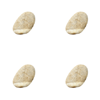
Pebbles
Place four pebbles on the sand in the form of a square. Keep adding as few pebbles as necessary to double the area. How many extra pebbles are added each time?
It's All about 64
Write the numbers up to 64 in an interesting way so that the shape they make at the end is interesting, different, more exciting ... than just a square.
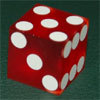
Taking a Die for a Walk
Investigate the numbers that come up on a die as you roll it in the direction of north, south, east and west, without going over the path it's already made.

Month Mania
Can you design a new shape for the twenty-eight squares and arrange the numbers in a logical way? What patterns do you notice?
Sending Cards
This challenge asks you to investigate the total number of cards that would be sent if four children send one to all three others. How many would be sent if there were five children? Six?
Magazines
Let's suppose that you are going to have a magazine which has 16 pages of A5 size. Can you find some different ways to make these pages? Investigate the pattern for each if you number the pages.
Exploring Wild & Wonderful Number Patterns
EWWNP means Exploring Wild and Wonderful Number Patterns Created by Yourself! Investigate what happens if we create number patterns using some simple rules.
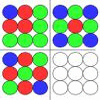
Counter Ideas
Here are some ideas to try in the classroom for using counters to investigate number patterns.