 Links to the NRICH website Home page

30 April (Primary), 1 May (Secondary)
Resources tagged with: Calculators
There are 18 results
Broad Topics > Physical and digital manipulatives > Calculators
Round and Round and Round
Where will the point stop after it has turned through 30 000 degrees? I took out my calculator and typed 30 000 ÷ 360. How did this help?



Largest Product
Which set of numbers that add to 100 have the largest product?
Forgot the Numbers
On my calculator I divided one whole number by another whole number and got the answer 3.125. If the numbers are both under 50, what are they?
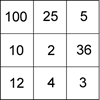
Four Go for Two
Four Go game for an adult and child. Will you be the first to have four numbers in a row on the number line?

Number Pattern Explorations
Investigate what happens if we create number patterns using some simple rules.

Mobile Numbers
In this investigation, you are challenged to make mobile phone numbers which are easy to remember. What happens if you make a sequence adding 2 each time?

Decimal Time
Use the clocks to investigate French decimal time in this problem. Can you see how this time system worked?
One Million to Seven
Start by putting one million (1 000 000) into the display of your calculator. Can you reduce this to 7 using just the 7 key and add, subtract, multiply, divide and equals as many times as you like?
Adding with the Abacus
Nowadays the calculator is very familiar to many of us. What did people do to save time working out more difficult problems before the calculator existed?
Calculating the Difference: A Discussion of the Use of Calculators in the English Primary Classroom.
Clare Green looks at the role of the calculator in the teaching and learning of primary mathematics.

Reverse Trick
Tell your friends that you have a strange calculator that turns numbers backwards. What secret number do you have to enter to make 141 414 turn around?

A Conversation Piece
Take the number 6 469 693 230 and divide it by the first ten prime numbers and you'll find the most beautiful, most magic of all numbers. What is it?
Clever Keys
On a calculator, make 15 by using only the 2 key and any of the four operations keys. How many ways can you find to do it?

Special 24
Find another number that is one short of a square number and when you double it and add 1, the result is also a square number.
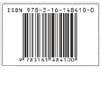
Book Codes
Look on the back of any modern book and you will find an ISBN code. Take this code and calculate this sum in the way shown. Can you see what the answers always have in common?
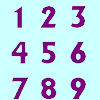
Adding All Nine
Make a set of numbers that use all the digits from 1 to 9, once and once only. Add them up. The result is divisible by 9. Add each of the digits in the new number. What is their sum? Now try some other possibilities for yourself!
It's All about 64
Write the numbers up to 64 in an interesting way so that the shape they make at the end is interesting, different, more exciting ... than just a square.

Exploring Wild & Wonderful Number Patterns
EWWNP means Exploring Wild and Wonderful Number Patterns Created by Yourself! Investigate what happens if we create number patterns using some simple rules.