 Links to the NRICH website Home page

30 April (Primary), 1 May (Secondary)
Resources tagged with: Experimental probability
There are 29 results
Broad Topics > Probability > Experimental probability
Statistical Shorts
Can you decide whether these short statistical statements are always, sometimes or never true?


What Does Random Look Like?
Engage in a little mathematical detective work to see if you can spot the fakes.
The Car That Passes
What statements can you make about the car that passes the school gates at 11am on Monday? How will you come up with statements and test your ideas?

In the Playground
What can you say about the child who will be first on the playground tomorrow morning at breaktime in your school?

Do You Feel Lucky?
Some people offer advice on how to win at games of chance, or how to influence probability in your favour. Can you decide whether advice is good or not?
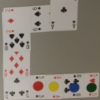
Sociable Cards
Move your counters through this snake of cards and see how far you can go. Are you surprised by where you end up?

Interactive Spinners
This interactivity invites you to make conjectures and explore probabilities of outcomes related to two independent events.

It's a Tie
Kaia is sure that her father has worn a particular tie twice a week in at least five of the last ten weeks, but her father disagrees. Who do you think is right?

Cosy Corner
Six balls are shaken. You win if at least one red ball ends in a corner. What is the probability of winning?
Two's Company
Seven balls are shaken. You win if the two blue balls end up touching. What is the probability of winning?

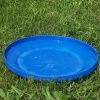
Flippin' Discs
Discs are flipped in the air. You win if all the faces show the same colour. What is the probability of winning?

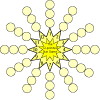
The Twelve Pointed Star Game
Have a go at this game which involves throwing two dice and adding their totals. Where should you place your counters to be more likely to win?
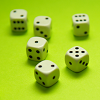
Roll These Dice
Roll two red dice and a green dice. Add the two numbers on the red dice and take away the number on the green. What are all the different possible answers?

Red or Black Spinner
A simple spinner that is equally likely to land on Red or Black. Useful if tossing a coin, dropping it, and rummaging about on the floor have lost their appeal. Needs a modern browser; if IE then at least version 9.

Investigating Epidemics
Simple models which help us to investigate how epidemics grow and die out.

Probably...
You'll need to work in a group for this problem. The idea is to decide, as a group, whether you agree or disagree with each statement.
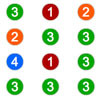
Winning the Lottery
Find out about the lottery that is played in a far-away land. What is the chance of winning?
Misunderstanding Randomness
Which of these ideas about randomness are actually correct?
Can't Find a Coin?
Can you generate a set of random results? Can you fool the random simulator?

The Random World
Think that a coin toss is 50-50 heads or tails? Read on to appreciate the ever-changing and random nature of the world in which we live.

Taking Chances
This article, for students and teachers, is mainly about probability, the mathematical way of looking at random chance and is a shorter version of Taking Chances Extended.
You Never Get a Six
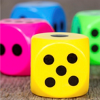
Charlie thinks that a six comes up less often than the other numbers on the dice. Have a look at the results of the test his class did to see if he was right.
Tricky Track
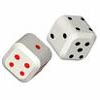
In this game you throw two dice and find their total, then move the appropriate counter to the right. Which counter reaches the purple box first?

Game of PIG - Sixes
Can you beat Piggy in this simple dice game? Can you figure out Piggy's strategy, and is there a better one?

Snail Trails
This is a game for two players. Does it matter where the target is put? Is there a good strategy for winning?

Stop or Dare
All you need for this game is a pack of cards. While you play the game, think about strategies that will increase your chances of winning.
Football World Cup Simulation
A maths-based Football World Cup simulation for teachers and students to use.