 Links to the NRICH website Home page

30 April (Primary), 1 May (Secondary)
Resources tagged with: Tree diagrams
There are 18 results
Broad Topics > Probability > Tree diagrams
Who's the Winner?
When two closely matched teams play each other, what is the most likely result?



Same Number!
If everyone in your class picked a number from 1 to 225, do you think any two people would pick the same number?

Which Spinners?
Can you work out which spinners were used to generate the frequency charts?
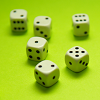
Chances Are
Which of these games would you play to give yourself the best possible chance of winning a prize?

In a Box
Chris and Jo put two red and four blue ribbons in a box. They each pick a ribbon from the box without looking. Jo wins if the two ribbons are the same colour. Is the game fair?

Rain or Shine
Predict future weather using the probability that tomorrow is wet given today is wet and the probability that tomorrow is wet given that today is dry.

Do You Brush Your Teeth Every Day?
How can we find out answers to questions like this if people often lie?

Dropouts
What percentage of students who graduate have never been to France?
Odd Dice
These strange dice are rolled. What is the probability that the sum obtained is an odd number?

Investigating Epidemics
Simple models which help us to investigate how epidemics grow and die out.
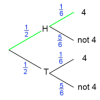
An Introduction to Tree Diagrams
This article explains how tree diagrams are constructed and helps you to understand how they can be used to calculate probabilities.
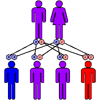
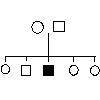
Peas in a Pod
What is the chance this pea plant will look like its parents?
Succession in Randomia
By tossing a coin one of three princes is chosen to be the next King of Randomia. Does each prince have an equal chance of taking the throne?
Playing Squash
Playing squash involves lots of mathematics. This article explores the mathematics of a squash match and how a knowledge of probability could influence the choices you make.
Squash
If the score is 8-8 do I have more chance of winning if the winner is the first to reach 9 points or the first to reach 10 points?