 Links to the NRICH website Home page

30 April (Primary), 1 May (Secondary)
Resources tagged with: Sorting, processing and representing data
There are 41 results
Broad Topics > Handling, processing and representing data > Sorting, processing and representing data
Going for Gold
Looking at the 2012 Olympic Medal table, can you see how the data is organised? Could the results be presented differently to give another nation the top place?



Our Sports
This problem explores the range of events in a sports day and which ones are the most popular and attract the most entries.

The Games' Medals
Can you see who the gold medal winner is? What about the silver medal winner and the bronze medal winner?
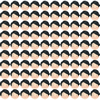
If the World Were a Village
This activity is based on data in the book 'If the World Were a Village'. How will you represent your chosen data for maximum effect?
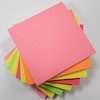
Sticky Data
You'll need to work in a group on this problem. Use your sticky notes to show the answer to questions such as 'how many girls are there in your group?'.

The Domesday Project
Take a look at these data collected by children in 1986 as part of the Domesday Project. What do they tell you? What do you think about the way they are presented?

Data Shapes
Sara and Will were sorting some pictures of shapes on cards. "I'll collect the circles," said Sara. "I'll take the red ones," answered Will. Can you see any cards they would both want?
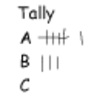
Class 5's Names
Class 5 were looking at the first letter of each of their names. They created different charts to show this information. Can you work out which member of the class was away on that day?

Sorting Logic Blocks
This activity focuses on similarities and differences between shapes.

Guess the Houses
This task depends on learners sharing reasoning, listening to opinions, reflecting and pulling ideas together.

Planning a School Trip
You are organising a school trip and you need to write a letter to parents to let them know about the day. Use the cards to gather all the information you need.
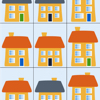
Sort the Street
Sort the houses in my street into different groups. Can you do it in any other ways?
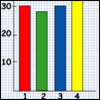
How Big Are Classes 5, 6 and 7?
Use the two sets of data to find out how many children there are in Classes 5, 6 and 7.
Ladybird Count
Some children were playing a game. Make a graph or picture to show how many ladybirds each child had.
Healthy Snack Shop
What information do you need to know to set up a healthy snack shop for your class?
P Is for Posing
In this article for Primary teachers, we suggest a four step data handling model, based on the work of Alan Graham.
Being Collaborative - Lower Primary Statistics
Statistics problems for you to work on with others.

Being Resourceful - Lower Primary Statistics
Statistics problems for lower primary that will get you thinking.
Being Resilient - Primary Statistics
Statistics problems at primary level that may require resilience.

Being Resourceful - Primary Statistics
Statistics problems at primary level that require careful consideration.
Being Collaborative - Primary Statistics
Statistics problems for primary learners to work on with others.

Being Curious - Primary Statistics
Statistics problems for inquiring primary learners.

Guess the Houses for Two
Guess the Houses game for an adult and child. Can you work out which house your partner has chosen by asking good questions?

May the Best Person Win
How can people be divided into groups fairly for events in the Paralympics, for school sports days, or for subject sets?
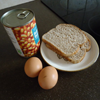
Tom Learns to Cook
If Tom wants to learn to cook his favourite supper, he needs to make a schedule so that everything is ready at the same time.


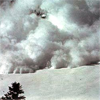
Avalanche!
Investigate how avalanches occur and how they can be controlled
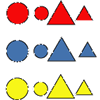
Logic Block Collections
What do you think is the same about these two Logic Blocks? What others do you think go with them in the set?
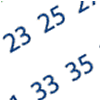
Sorting Numbers
Can you sort numbers into sets? Can you give each set a name?

Enriching Data Handling
This article for teachers looks at some suggestions taken from the NRICH website that offer a broad view of data and ask some more probing questions about it.
Meaningful Statistics
This article for teachers describes an activity which encourages meaningful data collection, display and interpretation.
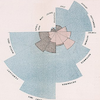
Florence Nightingale - the Compassionate Mathematician
Florence Nightingale may be well known for her role as a nurse, but she was also an excellent mathematician, collecting and analysing data to help improve hospital conditions.

Butterfly Cards
Four children were sharing a set of twenty-four butterfly cards. Are there any cards they all want? Are there any that none of them want?

Coordinates and Descartes
Have you ever wondered how maps are made? Or perhaps who first thought of the idea of designing maps? We're here to answer these questions for you.
What Does it Say to You?
Written for teachers, this article discusses mathematical representations and takes, in the second part of the article, examples of reception children's own representations.
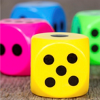
You Never Get a Six
Charlie thinks that a six comes up less often than the other numbers on the dice. Have a look at the results of the test his class did to see if he was right.
Dining Ducks
Use the information about the ducks on a particular farm to find out which of the statements about them must be true.
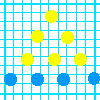
Graphing Number Patterns
Does a graph of the triangular numbers cross a graph of the six times table? If so, where? Will a graph of the square numbers cross the times table too?

Hoops/rope
Ideas for practical ways of representing data such as Venn and Carroll diagrams.