Filter by: Content type: ALL Problems Articles Games Stage: All Stage 1&2 Stage 2&3 Stage 3&4 Stage 4&5 Challenge level:
Analyse these beautiful biological images and attempt to rank them in size order.
Can you draw the height-time chart as this complicated vessel fills with water?
Imagine different shaped vessels being filled. Can you work out what the graphs of the water level should look like?
At the corner of the cube circular arcs are drawn and the area enclosed shaded. What fraction of the surface area of the cube is shaded? Try working out the answer without recourse to pencil and. . . .
Which is a better fit, a square peg in a round hole or a round peg in a square hole?
How efficiently can you pack together disks?
Explore one of these five pictures.
What fractions of the largest circle are the two shaded regions?
In the four examples below identical squares of side one unit contain some circles shaded blue. In which of the four examples is the shaded area greatest?
What is the area of the quadrilateral APOQ? Working on the building blocks will give you some insights that may help you to work it out.
A follow-up activity to Tiles in the Garden.
Straight lines are drawn from each corner of a square to the mid points of the opposite sides. Express the area of the octagon that is formed at the centre as a fraction of the area of the square.
Can you choose your units so that a cube has the same numerical value for it volume, surface area and total edge length?
Triangle ABC is right angled at A and semi circles are drawn on all three sides producing two 'crescents'. Show that the sum of the areas of the two crescents equals the area of triangle ABC.
Points P, Q, R and S each divide the sides AB, BC, CD and DA respectively in the ratio of 2 : 1. Join the points. What is the area of the parallelogram PQRS in relation to the original rectangle?
What is the ratio of the area of a square inscribed in a semicircle to the area of the square inscribed in the entire circle?
What is the shape and dimensions of a box that will contain six cups and have as small a surface area as possible.
Take any rectangle ABCD such that AB > BC. The point P is on AB and Q is on CD. Show that there is exactly one position of P and Q such that APCQ is a rhombus.
Can you rank these sets of quantities in order, from smallest to largest? Can you provide convincing evidence for your rankings?
Investigate how this pattern of squares continues. You could measure lengths, areas and angles.
Place four pebbles on the sand in the form of a square. Keep adding as few pebbles as necessary to double the area. How many extra pebbles are added each time?
Given a square ABCD of sides 10 cm, and using the corners as centres, construct four quadrants with radius 10 cm each inside the square. The four arcs intersect at P, Q, R and S. Find the. . . .
The diagonals of a trapezium divide it into four parts. Can you create a trapezium where three of those parts are equal in area?
A square of area 40 square cms is inscribed in a semicircle. Find the area of the square that could be inscribed in a circle of the same radius.
Prove that a triangle with sides of length 5, 5 and 6 has the same area as a triangle with sides of length 5, 5 and 8. Find other pairs of non-congruent isosceles triangles which have equal areas.
This shape comprises four semi-circles. What is the relationship between the area of the shaded region and the area of the circle on AB as diameter?
This article, written for teachers, discusses the merits of different kinds of resources: those which involve exploration and those which centre on calculation.
Six circular discs are packed in different-shaped boxes so that the discs touch their neighbours and the sides of the box. Can you put the boxes in order according to the areas of their bases?
ABC and DEF are equilateral triangles of side 3 and 4 respectively. Construct an equilateral triangle whose area is the sum of the area of ABC and DEF.
My measurements have got all jumbled up! Swap them around and see if you can find a combination where every measurement is valid.
Polygons drawn on square dotty paper have dots on their perimeter (p) and often internal (i) ones as well. Find a relationship between p, i and the area of the polygons.
A hallway floor is tiled and each tile is one foot square. Given that the number of tiles around the perimeter is EXACTLY half the total number of tiles, find the possible dimensions of the hallway.
Can you maximise the area available to a grazing goat?
A task which depends on members of the group noticing the needs of others and responding.
Investigate the properties of quadrilaterals which can be drawn with a circle just touching each side and another circle just touching each vertex.
What is the same and what is different about these circle questions? What connections can you make?
What happens to the area and volume of 2D and 3D shapes when you enlarge them?
Have a go at creating these images based on circles. What do you notice about the areas of the different sections?
I'm thinking of a rectangle with an area of 24. What could its perimeter be?
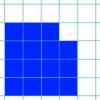
How can you change the area of a shape but keep its perimeter the same? How can you change the perimeter but keep the area the same?
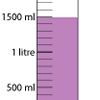
Draw some isosceles triangles with an area of $9$cm$^2$ and a vertex at (20,20). If all the vertices must have whole number coordinates, how many is it possible to draw?
If you have only 40 metres of fencing available, what is the maximum area of land you can fence off?
The area of a square inscribed in a circle with a unit radius is, satisfyingly, 2. What is the area of a regular hexagon inscribed in a circle with a unit radius?
Follow the instructions and you can take a rectangle, cut it into 4 pieces, discard two small triangles, put together the remaining two pieces and end up with a rectangle the same size. Try it!
A circle is inscribed in a triangle which has side lengths of 8, 15 and 17 cm. What is the radius of the circle?
A tower of squares is built inside a right angled isosceles triangle. The largest square stands on the hypotenuse. What fraction of the area of the triangle is covered by the series of squares?
It's easy to work out the areas of most squares that we meet, but what if they were tilted?
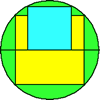
An activity for high-attaining learners which involves making a new cylinder from a cardboard tube.
Can you find the area of a parallelogram defined by two vectors?
Four quadrants are drawn centred at the vertices of a square . Find the area of the central region bounded by the four arcs.