 Links to the NRICH website Home page

30 April (Primary), 1 May (Secondary)
Resources tagged with: Length/distance
There are 12 results
Broad Topics > Measuring and calculating with units > Length/distance
Speed-time Problems at the Olympics
Have you ever wondered what it would be like to race against Usain Bolt?



A Question of Scale
Use your skill and knowledge to place various scientific lengths in order of size. Can you judge the length of objects with sizes ranging from 1 Angstrom to 1 million km with no wrong attempts?
Alternative Record Book
In which Olympic event does a human travel fastest? Decide which events to include in your Alternative Record Book.

Four on the Road
Four vehicles travel along a road one afternoon. Can you make sense of the graphs showing their motion?

Uniform Units
Can you choose your units so that a cube has the same numerical value for it volume, surface area and total edge length?
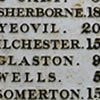
Where Am I?
From the information you are asked to work out where the picture was taken. Is there too much information? How accurate can your answer be?

Swimmers
Swimmers in opposite directions cross at 20m and at 30m from each end of a swimming pool. How long is the pool ?
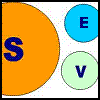
A Scale for the Solar System
The Earth is further from the Sun than Venus, but how much further? Twice as far? Ten times?

Flight Path
Use simple trigonometry to calculate the distance along the flight path from London to Sydney.

Pentagonal
Can you prove that the sum of the distances of any point inside a square from its sides is always equal (half the perimeter)? Can you prove it to be true for a rectangle or a hexagon?
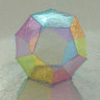
The Dodecahedron Explained
What is the shortest distance through the middle of a dodecahedron between the centres of two opposite faces?

On the Road
Four vehicles travelled on a road. What can you deduce from the times that they met?