 Links to the NRICH website Home page

30 April (Primary), 1 May (Secondary)
Resources tagged with: Length/distance
There are 40 results
Broad Topics > Measuring and calculating with units > Length/distance
Olympic Measures
These Olympic quantities have been jumbled up! Can you put them back together again?



Now and Then
Look at the changes in results on some of the athletics track events at the Olympic Games in 1908 and 1948. Compare the results for 2012.

Olympic Starters
Look at some of the results from the Olympic Games in the past. How do you compare if you try some similar activities?
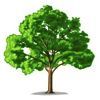
How Tall?
A group of children are discussing the height of a tall tree. How would you go about finding out its height?
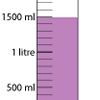
Place Your Orders
Can you rank these sets of quantities in order, from smallest to largest? Can you provide convincing evidence for your rankings?

Discuss and Choose
This activity challenges you to decide on the 'best' number to use in each statement. You may need to do some estimating, some calculating and some research.
Order, Order!
Can you place these quantities in order from smallest to largest?
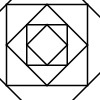
Shaping It
These pictures were made by starting with a square, finding the half-way point on each side and joining those points up. You could investigate your own starting shape.
All in a Jumble
My measurements have got all jumbled up! Swap them around and see if you can find a combination where every measurement is valid.
Up and Across
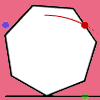
Experiment with the interactivity of "rolling" regular polygons, and explore how the different positions of the dot affects its vertical and horizontal movement at each stage.

How Far Does it Move?
Experiment with the interactivity of "rolling" regular polygons, and explore how the different positions of the red dot affects the distance it travels at each stage.

Take Your Dog for a Walk
Use the interactivity to move Pat. Can you reproduce the graphs and tell their story?

Rolling Around
A circle rolls around the outside edge of a square so that its circumference always touches the edge of the square. Can you describe the locus of the centre of the circle?

Being Resilient - Primary Measures
Measure problems at primary level that may require resilience.

Being Resourceful - Primary Measures
Measure problems at primary level that require careful consideration.
Being Collaborative - Primary Measures
Measure problems for primary learners to work on with others.

Being Curious - Primary Measures
Measure problems for inquiring primary learners.

2010: A Year of Investigations
This article for teachers suggests ideas for activities built around 10 and 2010.
Cutting it Out
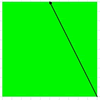
I cut this square into two different shapes. What can you say about the relationship between them?
Where Am I?
From the information you are asked to work out where the picture was taken. Is there too much information? How accurate can your answer be?
Lengthy Journeys
Investigate the different distances of these car journeys and find out how long they take.
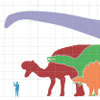
Working with Dinosaurs
This article for teachers suggests ways in which dinosaurs can be a great context for discussing measurement.

Triangle Relations
What do these two triangles have in common? How are they related?

Chippy's Journeys
Chippy the Robot goes on journeys. How far and in what direction must he travel to get back to his base?

Measure for Measure
This article, written for students, looks at how some measuring units and devices were developed.

Eclipses of the Sun
Mathematics has allowed us now to measure lots of things about eclipses and so calculate exactly when they will happen, where they can be seen from, and what they will look like.
Paradoxes
A paradox is a statement that seems to be both untrue and true at the same time. This article looks at a few examples and challenges you to investigate them for yourself.
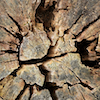
Timber!
How can the school caretaker be sure that the tree would miss the school buildings if it fell?
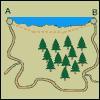
N Is a Number
N people visit their friends staying N kilometres along the coast. Some walk along the cliff path at N km an hour, the rest go by car. How long is the road?
Do You Measure Up?
A game for two or more players that uses a knowledge of measuring tools. Spin the spinner and identify which jobs can be done with the measuring tool shown.

Home Time
Alice's mum needs to go to each child's house just once and then back home again. How many different routes are there? Use the information to find out how long each road is on the route she took.
The Hare and the Tortoise
In this version of the story of the hare and the tortoise, the race is 10 kilometres long. Can you work out how long the hare sleeps for using the information given?
A Flying Holiday
Follow the journey taken by this bird and let us know for how long and in what direction it must fly to return to its starting point.
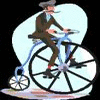
Watching the Wheels Go 'round and 'round
Use this information to work out whether the front or back wheel of this bicycle gets more wear and tear.

Bike Ride
Nirmala and Riki live 9 kilometres away from the nearest market. They both want to arrive at the market at exactly noon. What time should each of them start riding their bikes?

Practice Run
Chandrika was practising a long distance run. Can you work out how long the race was from the information?
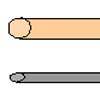
A Rod and a Pole
A lady has a steel rod and a wooden pole and she knows the length of each. How can she measure out an 8 unit piece of pole?
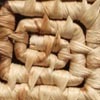
Rope Mat
How many centimetres of rope will I need to make another mat just like the one I have here?
Walk and Ride
How far have these students walked by the time the teacher's car reaches them after their bus broke down?

Great Squares
Investigate how this pattern of squares continues. You could measure lengths, areas and angles.