 Links to the NRICH website Home page

30 April (Primary), 1 May (Secondary)
Resources tagged with: Enlargements and scale factors
There are 13 results
Broad Topics > Transformations and constructions > Enlargements and scale factors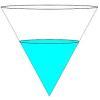
Fill Me up Too
In Fill Me Up we invited you to sketch graphs as vessels are filled with water. Can you work out the equations of the graphs?



Fit for Photocopying
Explore the relationships between different paper sizes.

Growing Rectangles
What happens to the area and volume of 2D and 3D shapes when you enlarge them?

Who is the fairest of them all ?
Explore the effect of combining enlargements.
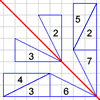
Transformation Game
Why not challenge a friend to play this transformation game?
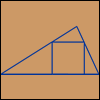
Squirty
Using a ruler, pencil and compasses only, it is possible to construct a square inside any triangle so that all four vertices touch the sides of the triangle.

Hex
Explain how the thirteen pieces making up the regular hexagon shown in the diagram can be re-assembled to form three smaller regular hexagons congruent to each other.

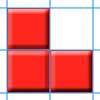
L-triominoes
L triominoes can fit together to make larger versions of themselves. Is every size possible to make in this way?
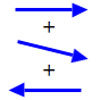
Arrow Arithmetic 1
The first part of an investigation into how to represent numbers using geometric transformations that ultimately leads us to discover numbers not on the number line.
The Rescaled Map
We use statistics to give ourselves an informed view on a subject of interest. This problem explores how to scale countries on a map to represent characteristics other than land area.

Conical Bottle
A right circular cone is filled with liquid to a depth of half its vertical height. The cone is inverted. How high up the vertical height of the cone will the liquid rise?
Matter of Scale
Can you prove Pythagoras' Theorem using enlargements and scale factors?