 Links to the NRICH website Home page

30 April (Primary), 1 May (Secondary)
Resources tagged with: Reflections
There are 22 results
Broad Topics > Transformations and constructions > Reflections
Surprising Transformations
I took the graph y=4x+7 and performed four transformations. Can you find the order in which I could have carried out the transformations?


Attractive Tablecloths
Charlie likes tablecloths that use as many colours as possible, but insists that his tablecloths have some symmetry. Can you work out how many colours he needs for different tablecloth designs?
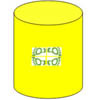
Paint Rollers for Frieze Patterns.
Proofs that there are only seven frieze patterns involve complicated group theory. The symmetries of a cylinder provide an easier approach.

The Fire-fighter's Car Keys
A fire-fighter needs to fill a bucket of water from the river and take it to a fire. What is the best point on the river bank for the fire-fighter to fill the bucket ?.
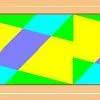
Rotations Are Not Single Round Here
I noticed this about streamers that have rotation symmetry : if there was one centre of rotation there always seems to be a second centre that also worked. Can you find a design that has only one centre of rotation ? Or if you thought that was impossible, could you say why ?
One Reflection Implies Another
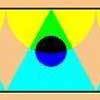
When a strip has vertical symmetry there always seems to be a second place where a mirror line could go. Perhaps you can find a design that has only one mirror line across it. Or, if you thought that was impossible, could you explain why ?

A Roll of Patterned Paper
A design is repeated endlessly along a line - rather like a stream of paper coming off a roll. Make a strip that matches itself after rotation, or after reflection


Orbiting Billiard Balls
What angle is needed for a ball to do a circuit of the billiard table and then pass through its original position?

Screen Shot
A moveable screen slides along a mirrored corridor towards a centrally placed light source. A ray of light from that source is directed towards a wall of the corridor, which it strikes at 45 degrees before being reflected across to the opposite wall and so on until it hits the screen.
Flipping Twisty Matrices
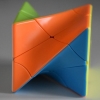
Investigate the transformations of the plane given by the 2 by 2 matrices with entries taking all combinations of values 0, -1 and +1.
Two Triangles in a Square
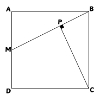
Given that ABCD is a square, M is the mid point of AD and CP is perpendicular to MB with P on MB, prove DP = DC.
Reflect Again
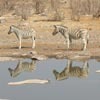
Follow hints to investigate the matrix which gives a reflection of the plane in the line y=tanx. Show that the combination of two reflections in intersecting lines is a rotation.

Rots and Refs
Follow hints using a little coordinate geometry, plane geometry and trig to see how matrices are used to work on transformations of the plane.
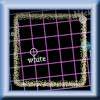
Snookered
In a snooker game the brown ball was on the lip of the pocket but it could not be hit directly as the black ball was in the way. How could it be potted by playing the white ball off a cushion?
The Frieze Tree
Patterns that repeat in a line are strangely interesting. How many types are there and how do you tell one type from another?
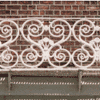
Frieze Patterns in Cast Iron
A gallery of beautiful photos of cast ironwork friezes in Australia with a mathematical discussion of the classification of frieze patterns.
Tricircle
The centre of the larger circle is at the midpoint of one side of an equilateral triangle and the circle touches the other two sides of the triangle. A smaller circle touches the larger circle and two sides of the triangle. If the small circle has radius 1 unit find the radius of the larger circle.
A Problem of Time
Consider a watch face which has identical hands and identical marks for the hours. It is opposite to a mirror. When is the time as read direct and in the mirror exactly the same between 6 and 7?
Retracircles
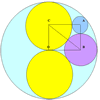
Four circles all touch each other and a circumscribing circle. Find the ratios of the radii and prove that joining 3 centres gives a 3-4-5 triangle.
Cushion Ball
The shortest path between any two points on a snooker table is the straight line between them but what if the ball must bounce off one wall, or 2 walls, or 3 walls?