 Links to the NRICH website Home page

30 April (Primary), 1 May (Secondary)
Resources tagged with: Reflections
There are 21 results
Broad Topics > Transformations and constructions > Reflections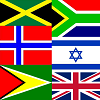
National Flags
This problem explores the shapes and symmetries in some national flags.


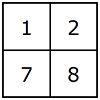
So It's Times!
How will you decide which way of flipping over and/or turning the grid will give you the highest total?
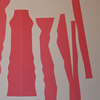
Exploded Squares
This practical activity challenges you to create symmetrical designs by cutting a square into strips.
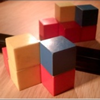
Reflector ! Rotcelfer
Can you place the blocks so that you see the reflection in the picture?

Let Us Reflect
Where can you put the mirror across the square so that you can still "see" the whole square? How many different positions are possible?

Clocks
These clocks have been reflected in a mirror. What times do they say?
What Am I?
Can you draw the shape that is being described by these cards?
It's Times Again
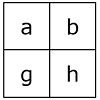
Which way of flipping over and/or turning this grid will give you the highest total? You'll need to imagine where the numbers will go in this tricky task!
Building with Longer Rods
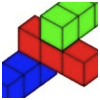
A challenging activity focusing on finding all possible ways of stacking rods.
Building with Rods
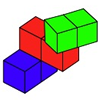
In how many ways can you stack these rods, following the rules?

2010: A Year of Investigations
This article for teachers suggests ideas for activities built around 10 and 2010.

Hexpentas
How many different ways can you find of fitting five hexagons together? How will you know you have found all the ways?
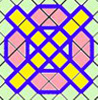
Making Maths: Indian Window Screen
Can you recreate this Indian screen pattern? Can you make up similar patterns of your own?
Coordinating Classroom Coordinates
This article describes a practical approach to enhance the teaching and learning of coordinates.
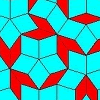
Shaping up with Tessellations
This article describes the scope for practical exploration of tessellations both in and out of the classroom. It seems a golden opportunity to link art with maths, allowing the creative side of your children to take over.
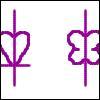
Hidden Meaning
What is the missing symbol? Can you decode this in a similar way?

Transforming the Letters
What happens to these capital letters when they are rotated through one half turn, or flipped sideways and from top to bottom?
Penta Play
A shape and space game for 2, 3 or 4 players. Be the last person to be able to place a pentomino piece on the playing board.
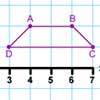
Transformation Tease
What are the coordinates of this shape after it has been transformed in the ways described? Compare these with the original coordinates. What do you notice about the numbers?
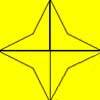
Star Find
Can you see which tile is the odd one out in this design? Using the basic tile, can you make a repeating pattern to decorate our wall?
Times
Which times on a digital clock have a line of symmetry? Which look the same upside-down? You might like to try this investigation and find out!