 Links to the NRICH website Home page

30 April (Primary), 1 May (Secondary)
Resources tagged with: Factors and multiples
There are 61 results
Broad Topics > Properties of numbers > Factors and multiples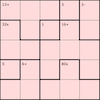
5 by 5 Mathdokus
Can you use the clues to complete these 5 by 5 Mathematical Sudokus?




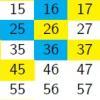

Charlie's Delightful Machine
Here is a machine with four coloured lights. Can you develop a strategy to work out the rules controlling each light?
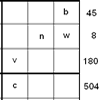
LCM Sudoku
Here is a Sudoku with a difference! Use information about lowest common multiples to help you solve it.
Factors and Multiples Game
A game in which players take it in turns to choose a number. Can you block your opponent?
Diagonal Product Sudoku
Given the products of diagonally opposite cells - can you complete this Sudoku?
Product Sudoku
The clues for this Sudoku are the product of the numbers in adjacent squares.

Cuisenaire Environment
An environment which simulates working with Cuisenaire rods.

Ben's Game
Ben, Jack and Emma passed counters to each other and ended with the same number of counters. How many did they start with?
Take Three from Five
Caroline and James pick sets of five numbers. Charlie tries to find three that add together to make a multiple of three. Can they stop him?

Fac-finding
Lyndon chose this as one of his favourite problems. It is accessible but needs some careful analysis of what is included and what is not. A systematic approach is really helpful.
Telescoping Functions
Take a complicated fraction with the product of five quartics top and bottom and reduce this to a whole number. This is a numerical example involving some clever algebra.
Divisibility Tests
This article explains various divisibility rules and why they work. An article to read with pencil and paper handy.

Shopping Basket
The items in the shopping basket add and multiply to give the same amount. What could their prices be?

Number Rules - OK
Can you produce convincing arguments that a selection of statements about numbers are true?

Why 24?
Take any prime number greater than 3 , square it and subtract one. Working on the building blocks will help you to explain what is special about your results.

Funny Factorisation
Using the digits 1 to 9, the number 4396 can be written as the product of two numbers. Can you find the factors?
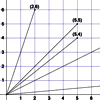
Beelines
Is there a relationship between the coordinates of the endpoints of a line and the number of grid squares it crosses?
Expenses
What is the largest number which, when divided into 1905, 2587, 3951, 7020 and 8725 in turn, leaves the same remainder each time?

Big Powers
Three people chose this as a favourite problem. It is the sort of problem that needs thinking time - but once the connection is made it gives access to many similar ideas.
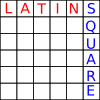
Latin Numbers
Can you create a Latin Square from multiples of a six digit number?
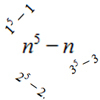
Common Divisor
Find the largest integer which divides every member of the following sequence: 1^5-1, 2^5-2, 3^5-3, ... n^5-n.

Em'power'ed
Find the smallest numbers a, b, and c such that: a^2 = 2b^3 = 3c^5 What can you say about other solutions to this problem?

Different by One
Can you make lines of Cuisenaire rods that differ by 1?

What a Joke
Each letter represents a different positive digit AHHAAH / JOKE = HA What are the values of each of the letters?
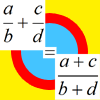
Can it Be?
When if ever do you get the right answer if you add two fractions by adding the numerators and adding the denominators?

Public Key Cryptography
An introduction to coding and decoding messages and the maths behind how to secretly share information.
The Public Key
Find 180 to the power 59 (mod 391) to crack the code. To find the secret number with a calculator we work with small numbers like 59 and 391 but very big numbers are used in the real world for this.

Polite Numbers
A polite number can be written as the sum of two or more consecutive positive integers, for example 8+9+10=27 is a polite number. Can you find some more polite, and impolite, numbers?

Multiplication Magic
Given any 3 digit number you can use the given digits and name another number which is divisible by 37 (e.g. given 628 you say 628371 is divisible by 37 because you know that 6+3 = 2+7 = 8+1 = 9). The question asks you to explain the trick.

Phew I'm Factored
Explore the factors of the numbers which are written as 10101 in different number bases. Prove that the numbers 10201, 11011 and 10101 are composite in any base.

Powerful Factors
Use the fact that: x²-y² = (x-y)(x+y) and x³+y³ = (x+y) (x²-xy+y²) to find the highest power of 2 and the highest power of 3 which divide 5^{36}-1.

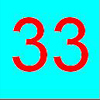
Dirisibly Yours
Find and explain a short and neat proof that 5^(2n+1) + 11^(2n+1) + 17^(2n+1) is divisible by 33 for every non negative integer n.

Sums of Squares and Sums of Cubes
An account of methods for finding whether or not a number can be written as the sum of two or more squares or as the sum of two or more cubes.

Really Mr. Bond
115^2 = (110 x 120) + 25, that is 13225 895^2 = (890 x 900) + 25, that is 801025 Can you explain what is happening and generalise?
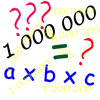
Factoring a Million
In how many ways can the number 1 000 000 be expressed as the product of three positive integers?

Times Right
Using the digits 1, 2, 3, 4, 5, 6, 7 and 8, mulitply a two two digit numbers are multiplied to give a four digit number, so that the expression is correct. How many different solutions can you find?

Factorial
How many zeros are there at the end of the number which is the product of first hundred positive integers?
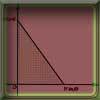
Hypotenuse Lattice Points
The triangle OMN has vertices on the axes with whole number co-ordinates. How many points with whole number coordinates are there on the hypotenuse MN?

Squaresearch
Consider numbers of the form un = 1! + 2! + 3! +...+n!. How many such numbers are perfect squares?
Sixational
The nth term of a sequence is given by the formula n^3 + 11n. Find the first four terms of the sequence given by this formula and the first term of the sequence which is bigger than one million. Prove that all terms of the sequence are divisible by 6.
A Biggy
Find the smallest positive integer N such that N/2 is a perfect cube, N/3 is a perfect fifth power and N/5 is a perfect seventh power.

Mod 3
Prove that if a^2+b^2 is a multiple of 3 then both a and b are multiples of 3.
DOTS Division
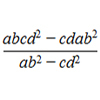
Take any pair of two digit numbers x=ab and y=cd where, without loss of generality, ab > cd . Form two 4 digit numbers r=abcd and s=cdab and calculate: {r^2 - s^2} /{x^2 - y^2}.
N000ughty Thoughts
How many noughts are at the end of these giant numbers?
Some Cubes
The sum of the cubes of two numbers is 7163. What are these numbers?
Old Nuts
In turn 4 people throw away three nuts from a pile and hide a quarter of the remainder finally leaving a multiple of 4 nuts. How many nuts were at the start?