 Links to the NRICH website Home page

30 April (Primary), 1 May (Secondary)
Resources tagged with: Rational and irrational numbers
There are 21 results
Broad Topics > Place value and the number system > Rational and irrational numbers


Irrational Arithmagons
Can you work out the irrational numbers that belong in the circles to make the multiplication arithmagon correct?


The Clue Is in the Question
Starting with one of the mini-challenges, how many of the other mini-challenges will you invent for yourself?
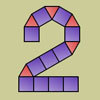
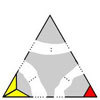
Impossible Triangles?
Which of these triangular jigsaws are impossible to finish?

The Square Hole
If the yellow equilateral triangle is taken as the unit for area, what size is the hole ?
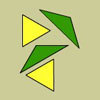
Equal Equilateral Triangles
Can you make a regular hexagon from yellow triangles the same size as a regular hexagon made from green triangles ?
What Are Numbers?
Ranging from kindergarten mathematics to the fringe of research this informal article paints the big picture of number in a non technical way suitable for primary teachers and older students.
Spirostars
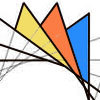
A spiropath is a sequence of connected line segments end to end taking different directions. The same spiropath is iterated. When does it cycle and when does it go on indefinitely?

An Introduction to Proof by Contradiction
An introduction to proof by contradiction, a powerful method of mathematical proof.

Rational Round
Show that there are infinitely many rational points on the unit circle and no rational points on the circle x^2+y^2=3.
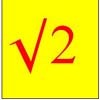
Proof Sorter - the Square Root of 2 Is Irrational
Try this interactivity to familiarise yourself with the proof that the square root of 2 is irrational. Sort the steps of the proof into the correct order.
Approximations, Euclid's Algorithm & Continued Fractions
This article sets some puzzles and describes how Euclid's algorithm and continued fractions are related.
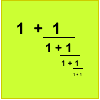
Continued Fractions II
In this article we show that every whole number can be written as a continued fraction of the form k/(1+k/(1+k/...)).
Rationals Between...
What fractions can you find between the square roots of 65 and 67?

Rational Roots
Given that a, b and c are natural numbers show that if sqrt a+sqrt b is rational then it is a natural number. Extend this to 3 variables.
Good Approximations
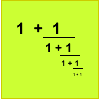
Solve quadratic equations and use continued fractions to find rational approximations to irrational numbers.

Be Reasonable
Prove that sqrt2, sqrt3 and sqrt5 cannot be terms of ANY arithmetic progression.