 Links to the NRICH website Home page

30 April (Primary), 1 May (Secondary)
Resources tagged with: Calculus generally
There are 27 results
Broad Topics > Calculus > Calculus generally
Interactive Workout - Mathmo
Mathmo is a revision tool for post-16 mathematics. It's great installed as a smartphone app, but it works well in pads and desktops and notebooks too. Give yourself a mathematical workout!



Population Dynamics Collection
This is our collection of tasks on the mathematical theme of 'Population Dynamics' for advanced students and those interested in mathematical modelling.
Population Dynamics - Part 1
First in our series of problems on population dynamics for advanced students.
A Different Differential Equation
Explore the properties of this different sort of differential equation.

Population Ecology Using Probability
An advanced mathematical exploration supporting our series of articles on population dynamics for advanced students.
Population Dynamics - Part 5
Fifth in our series of problems on population dynamics for advanced students.
Population Dynamics - Part 6
Sixth in our series of problems on population dynamics for advanced students.

Branching Processes and Extinction
An advanced mathematical exploration supporting our series of articles on population dynamics for advanced students.
Population Dynamics - Part 4
Fourth in our series of problems on population dynamics for advanced students.

Patterns of Inflection
Find the relationship between the locations of points of inflection, maxima and minima of functions.
Population Dynamics - Part 2
Second in our series of problems on population dynamics for advanced students.

Calculus Analogies
Consider these analogies for helping to understand key concepts in calculus.

Curve Hunter
This problem challenges you to sketch curves with different properties.
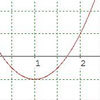
Turning to Calculus
Get started with calculus by exploring the connections between the sign of a curve and the sign of its gradient.
Population Dynamics - Part 3
Third in our series of problems on population dynamics for advanced students.
Maths Shop Window
Make a functional window display which will both satisfy the manager and make sense to the shoppers
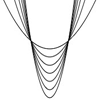
Erratic Quadratic
Can you find a quadratic equation which passes close to these points?

Scientific Curves
Can you sketch these difficult curves, which have uses in mathematical modelling?
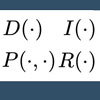
Calculus Countdown
Can you hit the target functions using a set of input functions and a little calculus and algebra?
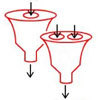
Operating Machines
What functions can you make using the function machines RECIPROCAL and PRODUCT and the operator machines DIFF and INT?
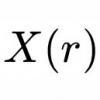
Implicitly
Can you find the maximum value of the curve defined by this expression?
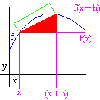
Fractional Calculus III
Fractional calculus is a generalisation of ordinary calculus where you can differentiate n times when n is not a whole number.
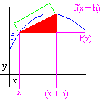
Fractional Calculus II
Here explore some ideas of how the definitions and methods of calculus change if you integrate or differentiate n times when n is not a whole number.
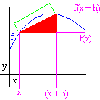
Fractional Calculus I
You can differentiate and integrate n times but what if n is not a whole number? This generalisation of calculus was introduced and discussed on askNRICH by some school students.
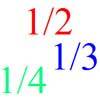
Power Up
Show without recourse to any calculating aid that 7^{1/2} + 7^{1/3} + 7^{1/4} < 7 and 4^{1/2} + 4^{1/3} + 4^{1/4} > 4 . Sketch the graph of f(x) = x^{1/2} + x^{1/3} + x^{1/4} -x
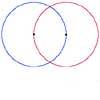
2D-3D
Two circles of equal size intersect and the centre of each circle is on the circumference of the other. What is the area of the intersection? Now imagine that the diagram represents two spheres of equal volume with the centre of each sphere on the surface of the other. What is the volume of intersection?