 Links to the NRICH website Home page

30 April (Primary), 1 May (Secondary)
Resources tagged with: STEM - maths supporting SET
There are 34 results
Broad Topics > STEM mapping > STEM - maths supporting SET
What's That Graph?
Can you work out which processes are represented by the graphs?


Fill Me up Too
In Fill Me Up we invited you to sketch graphs as vessels are filled with water. Can you work out the equations of the graphs?
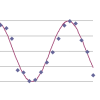
Back Fitter
10 graphs of experimental data are given. Can you use a spreadsheet to find algebraic graphs which match them closely, and thus discover the formulae most likely to govern the underlying processes?
A Question of Scale
Use your skill and knowledge to place various scientific lengths in order of size. Can you judge the length of objects with sizes ranging from 1 Angstrom to 1 million km with no wrong attempts?

Far Horizon
An observer is on top of a lighthouse. How far from the foot of the lighthouse is the horizon that the observer can see?


Witch's Hat
What shapes should Elly cut out to make a witch's hat? How can she make a taller hat?
Investigating Epidemics
Simple models which help us to investigate how epidemics grow and die out.
Designing Table Mats
Formulate and investigate a simple mathematical model for the design of a table mat.
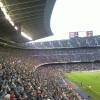
Stadium Sightline
How would you design the tiering of seats in a stadium so that all spectators have a good view?
Electric Kettle
Explore the relationship between resistance and temperature
Robot Camera
Could nanotechnology be used to see if an artery is blocked? Or is this just science fiction?
Big and Small Numbers in Chemistry
Get some practice using big and small numbers in chemistry.

Biology Measurement Challenge
Analyse these beautiful biological images and attempt to rank them in size order.
A Very Shiny Nose?
This problem explores the biology behind Rudolph's glowing red nose, and introduces the real life phenomena of bacterial quorum sensing.

Counting Dolphins
How would you go about estimating populations of dolphins?
Big and Small Numbers in the Physical World
Work with numbers big and small to estimate and calculate various quantities in physical contexts.
Big and Small Numbers in the Living World
Work with numbers big and small to estimate and calculate various quantities in biological contexts.
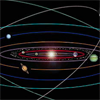
Construct the Solar System
Make an accurate diagram of the solar system and explore the concept of a grand conjunction.
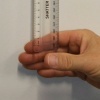
How Do You React?
To investigate the relationship between the distance the ruler drops and the time taken, we need to do some mathematical modelling...
Guessing the Graph
Can you suggest a curve to fit some experimental data? Can you work out where the data might have come from?
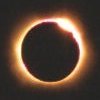
Perfect Eclipse
Use trigonometry to determine whether solar eclipses on earth can be perfect.

Constantly Changing
Many physical constants are only known to a certain accuracy. Explore the numerical error bounds in the mass of water and its constituents.

Carbon Footprints
Is it really greener to go on the bus, or to buy local?

Approximately Certain
Estimate these curious quantities sufficiently accurately that you can rank them in order of size
Big and Small Numbers in Physics
Work out the numerical values for these physical quantities.

Investigating the Dilution Series
Which dilutions can you make using only 10ml pipettes?

Choose Your Units
Which units would you choose best to fit these situations?
Big and Small Numbers in Biology
Work with numbers big and small to estimate and calulate various quantities in biological contexts.