 Links to the NRICH website Home page

30 April (Primary), 1 May (Secondary)
Resources tagged with: Visualising and representing
There are 151 results
Broad Topics > Thinking mathematically > Visualising and representing
Parallelogram It
Players take it in turns to choose a dot on the grid. The winner is the first to have four dots that can be joined to form a parallelogram.


Hollow Squares
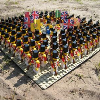
Which armies can be arranged in hollow square fighting formations?
Puzzling Place Value
Can you explain what is going on in these puzzling number tricks?

Square Number Surprises
There are unexpected discoveries to be made about square numbers...


Pythagoras Perimeters
If you know the perimeter of a right angled triangle, what can you say about the area?

Steel Cables
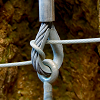
Some students have been working out the number of strands needed for different sizes of cable. Can you make sense of their solutions?
What's That Graph?
Can you work out which processes are represented by the graphs?
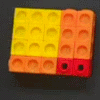
Factorising with Multilink
Can you find out what is special about the dimensions of rectangles you can make with squares, sticks and units?

Vector Journeys
Charlie likes to go for walks around a square park, while Alison likes to cut across diagonally. Can you find relationships between the vectors they walk along?

Which Is Bigger?
Which is bigger, n+10 or 2n+3? Can you find a good method of answering similar questions?
Which Is Cheaper?
When I park my car in Mathstown, there are two car parks to choose from. Can you help me to decide which one to use?

Speed-time Problems at the Olympics
Have you ever wondered what it would be like to race against Usain Bolt?

Partly Painted Cube
Jo made a cube from some smaller cubes, painted some of the faces of the large cube, and then took it apart again. 45 small cubes had no paint on them at all. How many small cubes did Jo use?

Mystic Rose
Use the animation to help you work out how many lines are needed to draw mystic roses of different sizes.
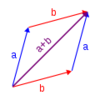
Vector Walk
Starting with two basic vector steps, which destinations can you reach on a vector walk?
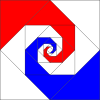
Baravelle
What can you see? What do you notice? What questions can you ask?

Speeding Boats
Two boats travel up and down a lake. Can you picture where they will cross if you know how fast each boat is travelling?

Cuboid Challenge
What's the largest volume of box you can make from a square of paper?
A Question of Scale
Use your skill and knowledge to place various scientific lengths in order of size. Can you judge the length of objects with sizes ranging from 1 Angstrom to 1 million km with no wrong attempts?

Searching for Mean(ing)
If you have a large supply of 3kg and 8kg weights, how many of each would you need for the average (mean) of the weights to be 6kg?
Spotting the Loophole
A visualisation problem in which you search for vectors which sum to zero from a jumble of arrows. Will your eyes be quicker than algebra?

Diamond Collector
Collect as many diamonds as you can by drawing three straight lines.

Dating Made Easier
If a sum invested gains 10% each year how long before it has doubled its value?

Semi-regular Tessellations
Semi-regular tessellations combine two or more different regular polygons to fill the plane. Can you find all the semi-regular tessellations?
Mixing More Paints
Can you find an efficent way to mix paints in any ratio?
Square It
Players take it in turns to choose a dot on the grid. The winner is the first to have four dots that can be joined to form a square.
The Spider and the Fly
A spider is sitting in the middle of one of the smallest walls in a room and a fly is resting beside the window. What is the shortest distance the spider would have to crawl to catch the fly?
Painted Cube
Imagine a large cube made from small red cubes being dropped into a pot of yellow paint. How many of the small cubes will have yellow paint on their faces?
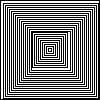
Perfectly Square
The sums of the squares of three related numbers is also a perfect square - can you explain why?

Always Perfect
Show that if you add 1 to the product of four consecutive numbers the answer is ALWAYS a perfect square.

Pick's Theorem
Polygons drawn on square dotty paper have dots on their perimeter (p) and often internal (i) ones as well. Find a relationship between p, i and the area of the polygons.
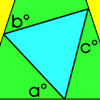
Terminology
Given an equilateral triangle inside an isosceles triangle, can you find a relationship between the angles?
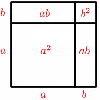
Proofs with Pictures
Some diagrammatic 'proofs' of algebraic identities and inequalities.


Attractive Tablecloths
Charlie likes tablecloths that use as many colours as possible, but insists that his tablecloths have some symmetry. Can you work out how many colours he needs for different tablecloth designs?

Marbles in a Box
How many winning lines can you make in a three-dimensional version of noughts and crosses?

Iff
Take a triangular number, multiply it by 8 and add 1. What is special about your answer? Can you prove it?

Nine Colours
Can you use small coloured cubes to make a 3 by 3 by 3 cube so that each face of the bigger cube contains one of each colour?

Funny Factorisation
Using the digits 1 to 9, the number 4396 can be written as the product of two numbers. Can you find the factors?
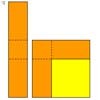
Plus Minus
Can you explain the surprising results Jo found when she calculated the difference between square numbers?

One and Three
Two motorboats travelling up and down a lake at constant speeds leave opposite ends A and B at the same instant, passing each other, for the first time 600 metres from A, and on their return, 400 metres from B. How long is the lake?
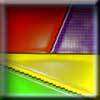
Doesn't Add Up
In this problem we are faced with an apparently easy area problem, but it has gone horribly wrong! What happened?
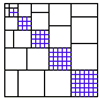
Picture Story
Can you see how this picture illustrates the formula for the sum of the first six cube numbers?

Bendy Quad
Four rods are hinged at their ends to form a convex quadrilateral. Investigate the different shapes that the quadrilateral can take. Be patient this problem may be slow to load.

Areas and Ratios
Do you have enough information to work out the area of the shaded quadrilateral?

Circles Ad Infinitum
A circle is inscribed in an equilateral triangle. Smaller circles touch it and the sides of the triangle, the process continuing indefinitely. What is the sum of the areas of all the circles?