 Links to the NRICH website Home page

30 April (Primary), 1 May (Secondary)
Resources tagged with: Golden ratio
There are 16 results
Broad Topics > Fractions, decimals, percentages, ratio and proportion > Golden ratio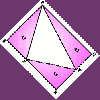
Golden Thoughts
Rectangle PQRS has X and Y on the edges. Triangles PQY, YRX and XSP have equal areas. Prove X and Y divide the sides of PQRS in the golden ratio.

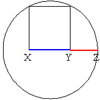
Gold Yet Again
Nick Lord says "This problem encapsulates for me the best features of the NRICH collection."
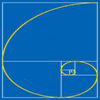
Whirling Fibonacci Squares
Draw whirling squares and see how Fibonacci sequences and golden rectangles are connected.

The Golden Ratio, Fibonacci Numbers and Continued Fractions.
An iterative method for finding the value of the Golden Ratio with explanations of how this involves the ratios of Fibonacci numbers and continued fractions.

Golden Fractions
Find the link between a sequence of continued fractions and the ratio of succesive Fibonacci numbers.
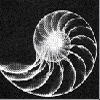
Leonardo of Pisa and the Golden Rectangle
Leonardo who?! Well, Leonardo is better known as Fibonacci and this article will tell you some of fascinating things about his famous sequence.

Golden Fibs
When is a Fibonacci sequence also a geometric sequence? When the ratio of successive terms is the golden ratio!


Pentakite
Given a regular pentagon, can you find the distance between two non-adjacent vertices?
Golden Ratio
Solve an equation involving the Golden Ratio phi where the unknown occurs as a power of phi.
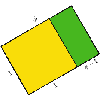
About Pythagorean Golden Means
What is the relationship between the arithmetic, geometric and harmonic means of two numbers, the sides of a right angled triangle and the Golden Ratio?
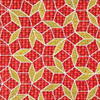
Pent
The diagram shows a regular pentagon with sides of unit length. Find all the angles in the diagram. Prove that the quadrilateral shown in red is a rhombus.

Golden Powers
You add 1 to the golden ratio to get its square. How do you find higher powers?

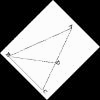
Golden Triangle
Three triangles ABC, CBD and ABD (where D is a point on AC) are all isosceles. Find all the angles. Prove that the ratio of AB to BC is equal to the golden ratio.
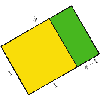
Pythagorean Golden Means
Show that the arithmetic mean, geometric mean and harmonic mean of a and b can be the lengths of the sides of a right-angles triangle if and only if a = bx^3, where x is the Golden Ratio.
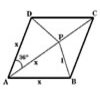
Gold Again
Without using a calculator, computer or tables find the exact values of cos36cos72 and also cos36 - cos72.