 Links to the NRICH website Home page

30 April (Primary), 1 May (Secondary)
Resources tagged with: Divisibility
There are 31 results
Broad Topics > Properties of numbers > Divisibility
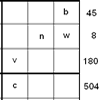
LCM Sudoku
Here is a Sudoku with a difference! Use information about lowest common multiples to help you solve it.


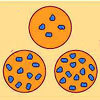
Odd Stones
On a "move" a stone is removed from two of the circles and placed in the third circle. Here are five of the ways that 27 stones could be distributed.
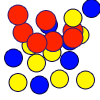
Ben's Game
Ben, Jack and Emma passed counters to each other and ended with the same number of counters. How many did they start with?
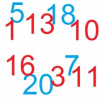
Take Three from Five
Caroline and James pick sets of five numbers. Charlie tries to find three that add together to make a multiple of three. Can they stop him?

Fac-finding
Lyndon chose this as one of his favourite problems. It is accessible but needs some careful analysis of what is included and what is not. A systematic approach is really helpful.
Divisibility Tests
This article explains various divisibility rules and why they work. An article to read with pencil and paper handy.

Why 24?
Take any prime number greater than 3 , square it and subtract one. Working on the building blocks will help you to explain what is special about your results.
Expenses
What is the largest number which, when divided into 1905, 2587, 3951, 7020 and 8725 in turn, leaves the same remainder each time?

Big Powers
Three people chose this as a favourite problem. It is the sort of problem that needs thinking time - but once the connection is made it gives access to many similar ideas.
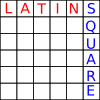
Latin Numbers
Can you create a Latin Square from multiples of a six digit number?
Prime AP
What can you say about the common difference of an AP where every term is prime?

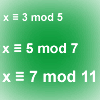
The Chinese Remainder Theorem
In this article we shall consider how to solve problems such as "Find all integers that leave a remainder of 1 when divided by 2, 3, and 5."

There's Always One Isn't There
Take any pair of numbers, say 9 and 14. Take the larger number, fourteen, and count up in 14s. Then divide each of those values by the 9, and look at the remainders.

Public Key Cryptography
An introduction to coding and decoding messages and the maths behind how to secretly share information.

The Knapsack Problem and Public Key Cryptography
An example of a simple Public Key code, called the Knapsack Code is described in this article, alongside some information on its origins. A knowledge of modular arithmetic is useful.

Knapsack
You have worked out a secret code with a friend. Every letter in the alphabet can be represented by a binary value.

Multiplication Magic
Given any 3 digit number you can use the given digits and name another number which is divisible by 37 (e.g. given 628 you say 628371 is divisible by 37 because you know that 6+3 = 2+7 = 8+1 = 9). The question asks you to explain the trick.
Transposition Fix
Suppose an operator types a US Bank check code into a machine and transposes two adjacent digits will the machine pick up every error of this type? Does the same apply to ISBN numbers; will a machine detect transposition errors in these numbers?
Check Codes
Details are given of how check codes are constructed (using modulus arithmetic for passports, bank accounts, credit cards, ISBN book numbers, and so on. A list of codes is given and you have to check if they are valid identification numbers?

Obviously?
Find the values of n for which 1^n + 8^n - 3^n - 6^n is divisible by 6.
Dirisibly Yours
Find and explain a short and neat proof that 5^(2n+1) + 11^(2n+1) + 17^(2n+1) is divisible by 33 for every non negative integer n.

396
The four digits 5, 6, 7 and 8 are put at random in the spaces of the number : 3 _ 1 _ 4 _ 0 _ 9 2 Calculate the probability that the answer will be a multiple of 396.
Modulus Arithmetic and a Solution to Dirisibly Yours
Peter Zimmerman from Mill Hill County High School in Barnet, London gives a neat proof that: 5^(2n+1) + 11^(2n+1) + 17^(2n+1) is divisible by 33 for every non negative integer n.

Squaresearch
Consider numbers of the form un = 1! + 2! + 3! +...+n!. How many such numbers are perfect squares?
Sixational
The nth term of a sequence is given by the formula n^3 + 11n. Find the first four terms of the sequence given by this formula and the first term of the sequence which is bigger than one million. Prove that all terms of the sequence are divisible by 6.

Novemberish
a) A four digit number (in base 10) aabb is a perfect square. Discuss ways of systematically finding this number. (b) Prove that 11^{10}-1 is divisible by 100.

Mod 3
Prove that if a^2+b^2 is a multiple of 3 then both a and b are multiples of 3.
N000ughty Thoughts
How many noughts are at the end of these giant numbers?

Code to Zero
Find all 3 digit numbers such that by adding the first digit, the square of the second and the cube of the third you get the original number, for example 1 + 3^2 + 5^3 = 135.