 Links to the NRICH website Home page

30 April (Primary), 1 May (Secondary)
Resources tagged with: Maths supporting SET
There are 21 results
Broad Topics > Cross-curricular contexts > Maths supporting SET
Olympic Measures
These Olympic quantities have been jumbled up! Can you put them back together again?



Triathlon and Fitness
The triathlon is a physically gruelling challenge. Can you work out which athlete burnt the most calories?
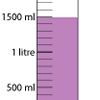
Place Your Orders
Can you rank these sets of quantities in order, from smallest to largest? Can you provide convincing evidence for your rankings?

Olympic Records
Can you deduce which Olympic athletics events are represented by the graphs?
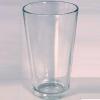
Fill Me Up
Can you sketch graphs to show how the height of water changes in different containers as they are filled?

Who's the Best?
Which countries have the most naturally athletic populations?
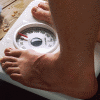
How Would You Score It?
Invent a scoring system for a 'guess the weight' competition.

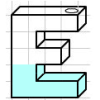
Maths Filler
Imagine different shaped vessels being filled. Can you work out what the graphs of the water level should look like?
Temperature
Is there a temperature at which Celsius and Fahrenheit readings are the same?

Maths Trails - Encouraging Purposeful Outdoor Learning
In this article, Becky Moseley outlines key considerations for Primary teachers wanting to create a maths trail in their own locality.
Toad in the Hole
Is it cheaper to cook a meal from scratch or to buy a ready meal? What difference does the number of people you're cooking for make?
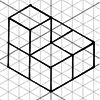


Witch's Hat
What shapes should Elly cut out to make a witch's hat? How can she make a taller hat?

Make Your Own Pencil Case
What shape would fit your pens and pencils best? How can you make it?
Designing Table Mats
Formulate and investigate a simple mathematical model for the design of a table mat.
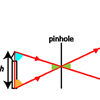
Pinhole Camera
Make your own pinhole camera for safe observation of the sun, and find out how it works.

Chocolate Cake
If I don't have the size of cake tin specified in my recipe, will the size I do have be OK?
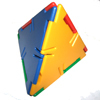
Air Nets
Can you visualise whether these nets fold up into 3D shapes? Watch the videos each time to see if you were correct.

Speedy Sidney
Two trains set off at the same time from each end of a single straight railway line. A very fast bee starts off in front of the first train and flies continuously back and forth between the two trains. How far does Sidney fly before he is squashed between the two trains?