 Links to the NRICH website Home page

30 April (Primary), 1 May (Secondary)
Resources tagged with: STEM - general
There are 33 NRICH Mathematical resources connected to STEM - general, you may find related items under Cross-curricular contexts.
Broad Topics > Cross-curricular contexts > STEM - general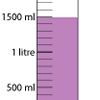
Place Your Orders
Can you rank these sets of quantities in order, from smallest to largest? Can you provide convincing evidence for your rankings?



Fill Me Up
Can you sketch graphs to show how the height of water changes in different containers as they are filled?

A Question of Scale
Use your skill and knowledge to place various scientific lengths in order of size. Can you judge the length of objects with sizes ranging from 1 Angstrom to 1 million km with no wrong attempts?

Reaction Timer
This problem offers you two ways to test reactions - use them to investigate your ideas about speeds of reaction.

Temperature
Is there a temperature at which Celsius and Fahrenheit readings are the same?

Where Are You Flying?
Where do people fly to from London? What is good and bad about these representations?

Troublesome Triangles
Many natural systems appear to be in equilibrium until suddenly a critical point is reached, setting up a mudslide or an avalanche or an earthquake. In this project, students will use a simple simulation game to investigate the properties of such systems.
Avalanche!
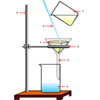
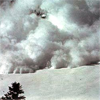
Investigate how avalanches occur and how they can be controlled

What's the Point of Squash?
Under which circumstances would you choose to play to 10 points in a game of squash which is currently tied at 8-all?

Carbon Footprints
Is it really greener to go on the bus, or to buy local?

Plaiting and Braiding
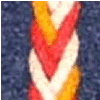
This article for students gives some instructions about how to make some different braids.

Shaping the Universe III - to Infinity and Beyond
The third installment in our series on the shape of astronomical systems, this article explores galaxies and the universe beyond our solar system.

Shaping the Universe II - the Solar System
The second in a series of articles on visualising and modelling shapes in the history of astronomy.

Shaping the Universe I - Planet Earth
This article explores ths history of theories about the shape of our planet. It is the first in a series of articles looking at the significance of geometric shapes in the history of astronomy.

First Forward Into Logo 3: Repeat REPEAT
More Logo for beginners. Now learn more about the REPEAT command.
First Forward Into Logo 12: Puzzling Sums
Can you puzzle out what sequences these Logo programs will give? Then write your own Logo programs to generate sequences.

First Forward Into Logo 11: Sequences
This part introduces the use of Logo for number work. Learn how to use Logo to generate sequences of numbers.

First Forward Into Logo 8: More about Variables
Write a Logo program, putting in variables, and see the effect when you change the variables.

First Forward Into Logo 5: Pen Up, Pen Down
Learn about Pen Up and Pen Down in Logo

First Forward Into Logo 9: Stars
Turn through bigger angles and draw stars with Logo.

First Forward Into Logo 7: Angles of Polygons
More Logo for beginners. Learn to calculate exterior angles and draw regular polygons using procedures and variables.

First Forward Into Logo 6: Variables and Procedures
Learn to write procedures and build them into Logo programs. Learn to use variables.

First Forward Into Logo 4: Circles
Learn how to draw circles using Logo. Wait a minute! Are they really circles? If not what are they?

First Forward Into Logo 2: Polygons
This is the second in a twelve part introduction to Logo for beginners. In this part you learn to draw polygons.

Eclipses of the Sun
Mathematics has allowed us now to measure lots of things about eclipses and so calculate exactly when they will happen, where they can be seen from, and what they will look like.
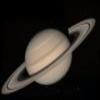
The Moving Planets
Mathematics has always been a powerful tool for studying, measuring and calculating the movements of the planets, and this article gives several examples.

First Forward Into Logo 10: Count up - Count Down
What happens when a procedure calls itself?

First Forward Into Logo 1: Square Five
A Short introduction to using Logo. This is the first in a twelve part series.