 Links to the NRICH website Home page

30 April (Primary), 1 May (Secondary)
Resources tagged with: Physics
There are 75 results
Broad Topics > Cross-curricular contexts > Physics
Gravity Paths
Where will the spaceman go when he falls through these strange planetary systems?

The Not-so-simple Pendulum 2
Things are roughened up and friction is now added to the approximate simple pendulum
Go Spaceship Go
Show that even a very powerful spaceship would eventually run out of overtaking power

The Not-so-simple Pendulum 1
See how the motion of the simple pendulum is not-so-simple after all.
Cannon Balls
How high will a ball taking a million seconds to fall travel?

Escape from Planet Earth
How fast would you have to throw a ball upwards so that it would never land?
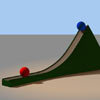
Whoosh
A ball whooshes down a slide and hits another ball which flies off the slide horizontally as a projectile. How far does it go?

Lunar Leaper
Gravity on the Moon is about 1/6th that on the Earth. A pole-vaulter 2 metres tall can clear a 5 metres pole on the Earth. How high a pole could he clear on the Moon?


Pack Man
A look at different crystal lattice structures, and how they relate to structural properties

Ramping it Up
Look at the calculus behind the simple act of a car going over a step.

Motorbike Momentum
A think about the physics of a motorbike riding upside down

Moving Stonehenge
A look at the fluid mechanics questions that are raised by the Stonehenge 'bluestones'.

The Power of Dimensional Analysis
An introduction to a useful tool to check the validity of an equation.

Diamonds Aren't Forever
Ever wondered what it would be like to vaporise a diamond? Find out inside...

Modelling Assumptions in Mechanics
An article demonstrating mathematically how various physical modelling assumptions affect the solution to the seemingly simple problem of the projectile.

Mach Attack
Have you got the Mach knack? Discover the mathematics behind exceeding the sound barrier.
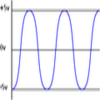
Pumping the Power
What is an AC voltage? How much power does an AC power source supply?
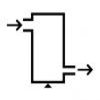
Keep Your Momentum Going
A look at a fluid mechanics technique called the Steady Flow Momentum Equation.

Sweeping Satellite
Derive an equation which describes satellite dynamics.
Levels of Bohr
Look at the units in the expression for the energy levels of the electrons in a hydrogen atom according to the Bohr model.

Ideal Axes
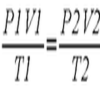
Explore how can changing the axes for a plot of an equation can lead to different shaped graphs emerging
The Real Hydrogen Atom
Dip your toe into the world of quantum mechanics by looking at the Schrodinger equation for hydrogen atoms

The Lorentz Force Law
Explore the Lorentz force law for charges moving in different ways.
Hold Still Please
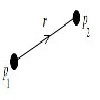
Can you arrange a set of charged particles so that none of them start to move when released from rest?

Cobalt Decay
Investigate the effects of the half-lifes of the isotopes of cobalt on the mass of a mystery lump of the element.

The Ultra Particle
Explore the energy of this incredibly energetic particle which struck Earth on October 15th 1991

Striking Gold
Investigate some of the issues raised by Geiger and Marsden's famous scattering experiment in which they fired alpha particles at a sheet of gold.

Constantly Changing
Many physical constants are only known to a certain accuracy. Explore the numerical error bounds in the mass of water and its constituents.

Lennard Jones Potential
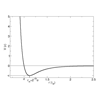
Investigate why the Lennard-Jones potential gives a good approximate explanation for the behaviour of atoms at close ranges

Big and Small Numbers in Physics
Work out the numerical values for these physical quantities.

Whose Line Graph Is it Anyway?
Which line graph, equations and physical processes go together?

engNRICH
engNRICH is the area of the stemNRICH Advanced site devoted to the mathematics underlying the study of engineering

physNRICH
PhysNRICH is the area of the StemNRICH site devoted to the mathematics underlying the study of physics

chemNRICH
chemNRICH is the area of the stemNRICH site devoted to the mathematics underlying the study of chemistry, designed to help develop the mathematics required to get the most from your study of chemistry at A-level and university.

Core Scientific Mathematics
This is the area of the advanced stemNRICH site devoted to the core applied mathematics underlying the sciences.

Drug Stabiliser
How does the half-life of a drug affect the build up of medication in the body over time?
Reaction Types
Explore the rates of growth of the sorts of simple polynomials often used in mathematical modelling.

Ideal Gases
Problems which make you think about the kinetic ideas underlying the ideal gas laws.


New Units for Old
Can you match up the entries from this table of units?

Bigger or Smaller?
When you change the units, do the numbers get bigger or smaller?
Universal Time, Mass, Length
Can you work out the natural time scale for the universe?

Earth Orbit
Follow in the steps of Newton and find the path that the earth follows around the sun.
Big and Small Numbers in Physics - Group Task
Work in groups to try to create the best approximations to these physical quantities.
Resistance
Find the equation from which to calculate the resistance of an infinite network of resistances.