 Links to the NRICH website Home page

30 April (Primary), 1 May (Secondary)
Resources tagged with: Problem solving
There are 16 results
Broad Topics > Mathematics education and research > Problem solving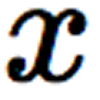
What's X Got to Do with It?
By following through the threads of algebraic thinking discussed in this article, we can ensure that children's mathematical experiences follow a continuous progression.

Low Threshold High Ceiling - an Introduction
In this article for teachers, we explain what is meant by Low Threshold High Ceiling tasks, and why we like them.

Creating a Low Threshold High Ceiling Classroom
This article explores the key features of a Low Threshold High Ceiling classroom.

I've Submitted a Solution - What Next?
In this article, the NRICH team describe the process of selecting solutions for publication on the site.
On Problems and Problem Solving - Looking Backward and Forward
Jenny Piggott reflects on the event held to mark her retirement from the directorship of NRICH, but also on problem solving itself.

Enriching Networks, Inspiring Teachers
Here are examples of how two schools set about the task of ensuring that problem solving was an integral part of their curriculum.

NRICH and Olympiads
A useful entry point into the NRICH site for those students interested in Mathematical Olympiad problems or the Maths Challenges.

Breaking the Equation ' Empirical Argument = Proof '
This article stems from research on the teaching of proof and offers guidance on how to move learners from focussing on experimental arguments to mathematical arguments and deductive reasoning.

A Problem Is a Problem for All That
In this article, Jennifer Piggott talks about just a few of the problems with problems that make them such a rich source of mathematics and approaches to learning mathematics.
Thinking Through, and By, Visualising
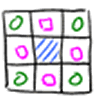
This article is based on some of the ideas that emerged during the production of a book which takes visualising as its focus. We began to identify problems which helped us to take a structured view of the purposes and skills of visualising.

Teachers Using NRICH 2
Kirsti Ashworth, an NRICH Teacher Fellow, talks about her experiences of using rich tasks.

Getting Started with Solving Rich Tasks
Need some help getting started with solving and thinking about rich tasks? Read on for some friendly advice.

Cultivating Creativity
Creativity in the mathematics classroom is not just about what pupils do but also what we do as teachers. If we are thinking creatively about the mathematical experiences we offer our pupils we can open up opportunities for them to be creative. Jennifer Piggott shares some of her thoughts on creative teaching, and how it can encourage creative learners.

Maths Trails
The NRICH team are always looking for new ways to engage teachers and pupils in problem solving. Here we explain the thinking behind maths trails.


Learning Mathematics Through Games Series: 4. from Strategy Games
Basic strategy games are particularly suitable as starting points for investigations. Players instinctively try to discover a winning strategy, and usually the best way to do this is to analyse the outcomes of series of 'moves'. With a little encouragement from the teacher, a mathematical investigation is born.