 Links to the NRICH website Home page

30 April (Primary), 1 May (Secondary)
Resources tagged with: Problem solving
There are 54 results
Broad Topics > Mathematics education and research > Problem solving
Hidden Gems: Tasks to Celebrate Our 20th Birthday
This article for primary teachers outlines the reasons for us selecting the tasks in our Hidden Gems Feature.
The Problem-solving Classroom
This article for teachers outlines issues to consider when developing an environment in which problem solving can thrive and links to a range of related NRICH tasks.

Young Children's Mathematical Recording
In this article, Janine Davenall reflects on children's personalised mathematical recordings as part of a small research project based in her Reception class.

Geometry in the Primary Curriculum
This article looks at how the National Curriculum aims of problem solving, reasoning and fluency can be embedded in geometry, using NRICH tasks.

Mathematical Problem Solving in the Early Years: Developing Opportunities, Strategies and Confidence
In this article for Early Years practitioners, Dr Sue Gifford outlines ways to develop children's problem-solving strategies and confidence in problem solving.

Using National Young Mathematicians' Award Tasks to Develop Problem-solving and Group-working Skills
This article for primary teachers uses National Young Mathematicians' Award tasks as contexts in which to develop learners' problem-solving and group-working skills.
Mastering Mathematics: the Challenge of Generalising and Proof
This article for primary teachers discusses how we can help learners generalise and prove, using NRICH tasks as examples.
Reasoning: the Journey from Novice to Expert (Article)
This article for primary teachers suggests ways in which we can help learners move from being novice reasoners to expert reasoners.

A Good Foundation for Number Learning for Five Year Olds?
This article, written by Dr. Sue Gifford, evaluates the Early Learning Numbers Goal in England, in the light of research.

Using NRICH Tasks to Develop Key Problem-solving Skills
This article, written for primary teachers, discusses what we mean by 'problem-solving skills' and draws attention to NRICH tasks which can help develop specific skills.
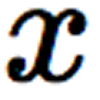
What's X Got to Do with It?
By following through the threads of algebraic thinking discussed in this article, we can ensure that children's mathematical experiences follow a continuous progression.
Developing Excellence in Problem Solving with Young Learners
Becoming confident and competent as a problem solver is a complex process that requires a range of skills and experience. In this article, Jennie suggests that we can support this process in three principal ways.
Take a ... Geoboard
This article for teachers explains why geoboards are such an invaluable resource and introduces several tasks which make use of them.

Exploring Fractions
This article, written for primary teachers, links to rich tasks which will help develop the underlying concepts associated with fractions and offers some suggestions for models and images that help support ideas around fractions.

Problem Solving and the New Curriculum
Is problem solving at the heart of your curriculum? In this article for teachers, Lynne explains why it should be.

Low Threshold High Ceiling - an Introduction
In this article for teachers, we explain what is meant by Low Threshold High Ceiling tasks, and why we like them.

Holywell Primary School and NRICH Action Research Project
This article for teachers outlines one school's research project to explore how children, girls in particular, could be motivated in Maths through a more practical approach.

Many Ideas with a Few Cubes
This short article outlines a few activities which make use of interlocking cubes.
Developing Logical Thinking: the Place of Strategy Games
This article outlines how strategy games can help children develop logical thinking, using examples from the NRICH website.

Group-worthy Tasks and Their Potential to Support Children to Develop Independent Problem-solving Skills
In this article for teachers, Jennie Pennant outlines how group-worthy tasks support the development of children's problem-solving skills.

Group-working Skills
This article for teachers suggests a range of activities to help children get better at working in groups.

Early Fraction Development
An article describing activities which will help develop young children's concept of fractions.

Maths and Creativity in Bristol
This article for teachers describes NRICH's work from 2010 to 2011 with Creative Partnerships and three Bristol primary schools.

A New Challenge
In this article for teachers, Bernard gives some background about the theme for November 2011's primary activities, which focus on analysing different approaches.

Creating a Low Threshold High Ceiling Classroom
This article explores the key features of a Low Threshold High Ceiling classroom.

I've Submitted a Solution - What Next?
In this article, the NRICH team describe the process of selecting solutions for publication on the site.
Working with Higher Attaining Mathematicians
In this article for teachers, Bernard describes ways to challenge higher-attaining children at primary level.
On Problems and Problem Solving - Looking Backward and Forward
Jenny Piggott reflects on the event held to mark her retirement from the directorship of NRICH, but also on problem solving itself.

Experiencing Problem Solving
Bernard Bagnall looks at what 'problem solving' might really mean in the context of primary classrooms.
Devon Teachers Enriching NRICH - Part 2
This is the second part of an article describing the ‘Enriching Mathematics’ project in Devon in 2008-9. The participating teachers describe NRICH activities they have tried with their learners.
Devon Teachers Enriching NRICH - Part 1
It began in Devon in 2008. The Maths Team was keen to raise the profile of mathematics investigations and further promote mathematical thinking and problem solving in primary classes. Liz was invited to Devon to launch ‘Enriching Mathematics’ with a group of 25 teachers.
Children's Mathematical Graphics: Understanding the Key Concept
In this article for teachers, Elizabeth Carruthers and Maulfry Worthington explore the differences between 'recording mathematics' and 'representing mathematical thinking'.

Positive about Negative Numbers
In this article for teachers, Liz Woodham describes resources on NRICH that can help primary-aged children get to grips with negative numbers.

Working with Luke
In this article for teachers, Liz Woodham describes conversations with Luke, aged 7, as they worked on some mathematics together.

Breaking the Equation ' Empirical Argument = Proof '
This article stems from research on the teaching of proof and offers guidance on how to move learners from focussing on experimental arguments to mathematical arguments and deductive reasoning.

A Problem Is a Problem for All That
In this article, Jennifer Piggott talks about just a few of the problems with problems that make them such a rich source of mathematics and approaches to learning mathematics.
Four Teachers Using NRICH
Vicki Pike was one of four NRICH Teacher Fellows who worked on embedding NRICH materials into their teaching. In this article, she writes about her experiences of working with students at Key Stage two.
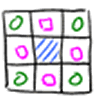
Thinking Through, and By, Visualising
This article is based on some of the ideas that emerged during the production of a book which takes visualising as its focus. We began to identify problems which helped us to take a structured view of the purposes and skills of visualising.

Integrating Rich Tasks - Activity 4.3
This professional development activity is designed to help you assess your embedding of rich tasks into the curriculum and, in particular, think about what to do next

Integrating Rich Tasks - Activity 4.2
This professional development activity is designed to help you assess your embedding of rich tasks into the curriculum through evaluating a theme

Integrating Rich Tasks - Activity 1.4
This professional development activity encourages you to investigate how rich tasks and problem solving link together.

Integrating Rich Tasks - Activity 3
The aim of this professional development activity is to successfully integrate some rich tasks into your curriculum planning.

Integrating Rich Tasks - Activity 2.1
This professional development activity looks at what teachers can do to support learners engaging with rich tasks

Integrating Rich Tasks - Activity 1.5
This professional development activity encourages you to investigate what pupils are doing when they problem solving.

Integrating Rich Tasks - Activity 1.3
This professional development activity encourages you to investigate what is meant by higher-order thinking skills.

Cultivating Creativity
Creativity in the mathematics classroom is not just about what pupils do but also what we do as teachers. If we are thinking creatively about the mathematical experiences we offer our pupils we can open up opportunities for them to be creative. Jennifer Piggott shares some of her thoughts on creative teaching, and how it can encourage creative learners.

I'm Stuck!
Being stuck is usually thought of as being a negative state of affairs. We want our pupils to succeed, not to struggle. Or do we? This article discusses why being stuck can be fruitful.

Maths Trails
The NRICH team are always looking for new ways to engage teachers and pupils in problem solving. Here we explain the thinking behind maths trails.


Learning Mathematics Through Games Series: 4. from Strategy Games
Basic strategy games are particularly suitable as starting points for investigations. Players instinctively try to discover a winning strategy, and usually the best way to do this is to analyse the outcomes of series of 'moves'. With a little encouragement from the teacher, a mathematical investigation is born.