 Links to the NRICH website Home page

30 April (Primary), 1 May (Secondary)
Resources tagged with: Rich Tasks
There are 32 results
Broad Topics > Mathematics education and research > Rich Tasks
Rich Mathematics
In this very brief article, the NRICH Team outlines what they understand by the term 'rich mathematics'.

Hidden Gems: Tasks to Celebrate Our 20th Birthday
This article for primary teachers outlines the reasons for us selecting the tasks in our Hidden Gems Feature.
Haringey 2014-2015
Find out about the five-term project (January 2014 to July 2015) which NRICH is leading in conjunction with Haringey Council, funded by London Schools Excellence Fund.



Exploring Fractions
This article, written for primary teachers, links to rich tasks which will help develop the underlying concepts associated with fractions and offers some suggestions for models and images that help support ideas around fractions.

Low Threshold High Ceiling - an Introduction
In this article for teachers, we explain what is meant by Low Threshold High Ceiling tasks, and why we like them.
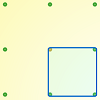
Peg and Pin Boards
This article for teachers suggests activities based on pegboards, from pattern generation to finding all possible triangles, for example.
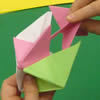
Maths and Creativity in Bristol
This article for teachers describes NRICH's work from 2010 to 2011 with Creative Partnerships and three Bristol primary schools.
Rich Mathematical Tasks
Liz Woodham describes a project with four primary/first schools in the East of England, focusing on rich mathematical tasks and funded by the NCETM.

Creating a Low Threshold High Ceiling Classroom
This article explores the key features of a Low Threshold High Ceiling classroom.
Devon Teachers Enriching NRICH - Part 2
This is the second part of an article describing the ‘Enriching Mathematics’ project in Devon in 2008-9. The participating teachers describe NRICH activities they have tried with their learners.
Devon Teachers Enriching NRICH - Part 1
It began in Devon in 2008. The Maths Team was keen to raise the profile of mathematics investigations and further promote mathematical thinking and problem solving in primary classes. Liz was invited to Devon to launch ‘Enriching Mathematics’ with a group of 25 teachers.

Assessing Pupil Progress (APP) and NRICH Resources
In this article Jenny talks about Assessing Pupils' Progress and the use of NRICH problems.
Kingsfield School - Building on Rich Starting Points
Alf and Tracy explain how the Kingsfield School maths department use common tasks to encourage all students to think mathematically about key areas in the curriculum.

Going for Games
In this article for teachers, Liz Woodham describes the criteria she uses to choose mathematical games for the classroom and shares some examples from NRICH.

Using Rich Tasks for the First Time
The teachers involved in the Engaging Mathematics Projectwanted to embed rich tasks from the NRICH website into their curriculum for all KS3 and KS4 students. In this article, the teachers share the issues they needed to consider and what they are doing to address them.
Two Heads Are Better Than One
An article that reminds us about the value and importance of communication in the mathematics classroom.
What Is a Mathematically Rich Task?
Here we describe the essence of a 'rich' mathematical task

Integrating Rich Tasks - Activity 4.3
This professional development activity is designed to help you assess your embedding of rich tasks into the curriculum and, in particular, think about what to do next

Integrating Rich Tasks - Activity 4.2
This professional development activity is designed to help you assess your embedding of rich tasks into the curriculum through evaluating a theme

Integrating Rich Tasks - Activity 1.4
This professional development activity encourages you to investigate how rich tasks and problem solving link together.

Integrating Rich Tasks - Activity 4.1
This professional development activity is designed to help you assess your embedding of rich tasks into the curriculum through peer observation

Integrating Rich Tasks - Activity 3
The aim of this professional development activity is to successfully integrate some rich tasks into your curriculum planning.

Integrating Rich Tasks - Activity 2.1
This professional development activity looks at what teachers can do to support learners engaging with rich tasks

Integrating Rich Tasks - Activity 1.3
This professional development activity encourages you to investigate what is meant by higher-order thinking skills.

Integrating Rich Tasks - Activity 1.2
These two tasks are designed to support professional development on integrating rich tasks. You are asked to think about what problems that encourage Higher Order Thinking Skills look like.

Integrating Rich Tasks - Activity 1.1
This is activity 1.1 in the series of activities designed to support professional development through integrating rich tasks. This activity looks specifically at what makes an activity "rich".

Crossing Bridges
An article for teachers based on a lecture and workshop activities at the NZAMT conference in New Zealand 2007

Enriching Patterns
Following on from a workshop at an MA Easter conference, Jennifer and Jenni talked about the way in which the website is made more accessible to teachers who want to plan threads of activity. Here’s a pattern- based theme.
Meaningful Maths Trails
Avril Crack describes how she went about planning and setting up a Maths trail for pupils in Bedfordshire.
Closing the Learning and Teaching Gap
This article discusses the findings of the 1995 TIMMS study how to use this information to close the performance gap that exists between nations.
Co-operative Problem Solving: Pieces of the Puzzle Approach
The content of this article is largely drawn from an Australian publication by Peter Gould that has been a source of many successful mathematics lessons for both children and student-teachers. It presents a style of problem-solving activity that has the potential to benefit ALL children in a class, both mathematically and socially, and is readily adaptable to most topics in mathematics curricula.

A Maths Afternoon
This article describes no ordinary maths lesson. There were 24 children, mostly Years 3 and 4, and there were 17 adults working with them - mothers, fathers, one grandmother and two grandfathers, a classroom assistant and their regular teacher. Every child was working with an adult, and no two adults sat together.