 Links to the NRICH website Home page

30 April (Primary), 1 May (Secondary)
Resources tagged with: Music
There are 6 NRICH Mathematical resources connected to Music, you may find related items under Cross-curricular contexts.
Broad Topics > Cross-curricular contexts > Music
Music to My Ears
Can you predict when you'll be clapping and when you'll be clicking if you start this rhythm? How about when a friend begins a new rhythm at the same time?


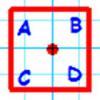
Dancing with Maths
An article for students and teachers on symmetry and square dancing. What do the symmetries of the square have to do with a dos-e-dos or a swing? Find out more?
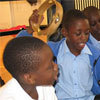
Count the Beat
This article, written by Nicky Goulder and Samantha Lodge, reveals how maths and marimbas can go hand-in-hand! Why not try out some of the musical maths activities in your own classroom?
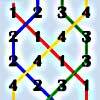
Oranges and Lemons, Say the Bells of St Clement's
Bellringers have a special way to write down the patterns they ring. Learn about these patterns and draw some of your own.
Bell Ringing
Suppose you are a bellringer. Can you find the changes so that, starting and ending with a round, all the 24 possible permutations are rung once each and only once?
Ding Dong Bell
The reader is invited to investigate changes (or permutations) in the ringing of church bells, illustrated by braid diagrams showing the order in which the bells are rung.