 Links to the NRICH website Home page

30 April (Primary), 1 May (Secondary)
Resources tagged with: Practical activity
There are 28 NRICH Mathematical resources connected to Practical activity, you may find related items under Physical and digital manipulatives.
Broad Topics > Physical and digital manipulatives > Practical activity
Factors and Multiples Game
A game in which players take it in turns to choose a number. Can you block your opponent?


Proof Sorter - Sum of an Arithmetic Sequence
Put the steps of this proof in order to find the formula for the sum of an arithmetic sequence
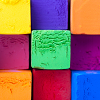
Nine Colours
Can you use small coloured cubes to make a 3 by 3 by 3 cube so that each face of the bigger cube contains one of each colour?
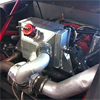
Cool as Ice
Design and construct a prototype intercooler which will satisfy agreed quality control constraints.
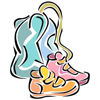
Gym Bag
Can Jo make a gym bag for her trainers from the piece of fabric she has?

Witch's Hat
What shapes should Elly cut out to make a witch's hat? How can she make a taller hat?
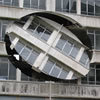
Turning the Place Over
As part of Liverpool08 European Capital of Culture there were a huge number of events and displays. One of the art installations was called "Turning the Place Over". Can you find our how it works?
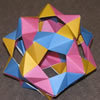
Modular Origami Polyhedra
These models have appeared around the Centre for Mathematical Sciences. Perhaps you would like to try to make some similar models of your own.
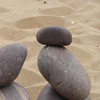
Well Balanced
Exploring balance and centres of mass can be great fun. The resulting structures can seem impossible. Here are some images to encourage you to experiment with non-breakable objects of your own.
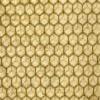
Fitting Flat Shapes
How efficiently can various flat shapes be fitted together?
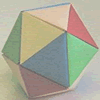
Paper Folding - Models of the Platonic Solids
A description of how to make the five Platonic solids out of paper.
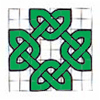
Making Maths: Celtic Knot Tiles
Make some celtic knot patterns using tiling techniques
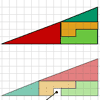
Muggles, Logo and Gradients
Logo helps us to understand gradients of lines and why Muggles Magic is not magic but mathematics. See the problem Muggles magic.
First Forward Into Logo 3: Repeat REPEAT
More Logo for beginners. Now learn more about the REPEAT command.
First Forward Into Logo 12: Puzzling Sums
Can you puzzle out what sequences these Logo programs will give? Then write your own Logo programs to generate sequences.
First Forward Into Logo 11: Sequences
This part introduces the use of Logo for number work. Learn how to use Logo to generate sequences of numbers.

First Forward Into Logo 8: More about Variables
Write a Logo program, putting in variables, and see the effect when you change the variables.

First Forward Into Logo 5: Pen Up, Pen Down
Learn about Pen Up and Pen Down in Logo

First Forward Into Logo 9: Stars
Turn through bigger angles and draw stars with Logo.
First Forward Into Logo 7: Angles of Polygons
More Logo for beginners. Learn to calculate exterior angles and draw regular polygons using procedures and variables.

First Forward Into Logo 6: Variables and Procedures
Learn to write procedures and build them into Logo programs. Learn to use variables.

First Forward Into Logo 4: Circles
Learn how to draw circles using Logo. Wait a minute! Are they really circles? If not what are they?
First Forward Into Logo 2: Polygons
This is the second in a twelve part introduction to Logo for beginners. In this part you learn to draw polygons.
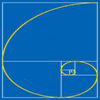
Whirling Fibonacci Squares
Draw whirling squares and see how Fibonacci sequences and golden rectangles are connected.

First Forward Into Logo 10: Count up - Count Down
What happens when a procedure calls itself?
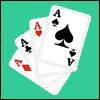
The Best Card Trick?
Time for a little mathemagic! Choose any five cards from a pack and show four of them to your partner. How can they work out the fifth?
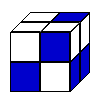
Cubic Conundrum
Which of the following cubes can be made from these nets?
Stonehenge
Explain why, when moving heavy objects on rollers, the object moves twice as fast as the rollers. Try a similar experiment yourself.