 Links to the NRICH website Home page

30 April (Primary), 1 May (Secondary)
Resources tagged with: Practical activity
There are 154 results
Broad Topics > Physical and digital manipulatives > Practical activity
Paper Partners
Can you describe a piece of paper clearly enough for your partner to know which piece it is?


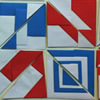
Paper Patchwork 2
Have a go at making a few of these shapes from paper in different sizes. What patterns can you create?
Paper Patchwork 1
Can you work out what shape is made when this piece of paper is folded up using the crease pattern shown?
Move Those Halves
For this task, you'll need an A4 sheet and two A5 transparent sheets. Decide on a way of arranging the A5 sheets on top of the A4 sheet and explore ...
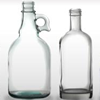
Bottles (2)
In this activity focusing on capacity, you will need a collection of different jars and bottles.
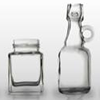
Bottles (1)
For this activity which explores capacity, you will need to collect some bottles and jars.
How Tall?
A group of children are discussing the height of a tall tree. How would you go about finding out its height?

Data Shapes
Sara and Will were sorting some pictures of shapes on cards. "I'll collect the circles," said Sara. "I'll take the red ones," answered Will. Can you see any cards they would both want?
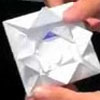
Bryony's Triangle
Watch the video to see how to fold a square of paper to create a flower. What fraction of the piece of paper is the small triangle?
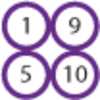
Pairs of Numbers
If you have ten counters numbered 1 to 10, how many can you put into pairs that add to 10? Which ones do you have to leave out? Why?
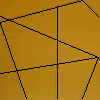
Shapely Lines
This challenge invites you to create your own picture using just straight lines. Can you identify shapes with the same number of sides and decorate them in the same way?
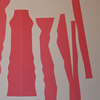
Exploded Squares
This practical activity challenges you to create symmetrical designs by cutting a square into strips.

Thirsty?
Can you lay out the pictures of the drinks in the way described by the clue cards?

The Hair Colour Game
The class were playing a maths game using interlocking cubes. Can you help them record what happened?

Next Size Up
The challenge for you is to make a string of six (or more!) graded cubes.
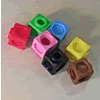
How Many?
This project challenges you to work out the number of cubes hidden under a cloth. What questions would you like to ask?
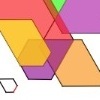
The Numbers Give the Design
Make new patterns from simple turning instructions. You can have a go using pencil and paper or with a floor robot.

Jig Shapes
Can you each work out what shape you have part of on your card? What will the rest of it look like?
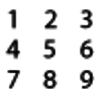
Two-digit Targets
You have a set of the digits from 0 to 9. Can you arrange these in the five boxes to make two-digit numbers as close to the targets as possible?

Repeating Patterns
Try continuing these patterns made from triangles. Can you create your own repeating pattern?

Making Longer, Making Shorter
Ahmed is making rods using different numbers of cubes. Which rod is twice the length of his first rod?
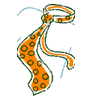
It's a Tie
Kaia is sure that her father has worn a particular tie twice a week in at least five of the last ten weeks, but her father disagrees. Who do you think is right?
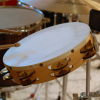
Music to My Ears
Can you predict when you'll be clapping and when you'll be clicking if you start this rhythm? How about when a friend begins a new rhythm at the same time?
Clapping Times
If you count from 1 to 20 and clap more loudly on the numbers in the two times table, as well as saying those numbers loudly, which numbers will be loud?
Factors and Multiples Game
A game in which players take it in turns to choose a number. Can you block your opponent?
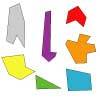
Sizing Them Up
Can you put these shapes in order of size? Start with the smallest.
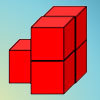
Brush Loads
How can you arrange the 5 cubes so that you need the smallest number of Brush Loads of paint to cover them? Try with other numbers of cubes as well.
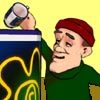
Little Man
The Man is much smaller than us. Can you use the picture of him next to a mug to estimate his height and how much tea he drinks?
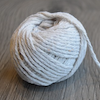
Stringy Quads
This practical problem challenges you to make quadrilaterals with a loop of string. You'll need some friends to help!
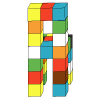
Chairs and Tables
Make a chair and table out of interlocking cubes, making sure that the chair fits under the table!

Tangram Tangle
If you split the square into these two pieces, it is possible to fit the pieces together again to make a new shape. How many new shapes can you make?

Sponge Sections
You have been given three shapes made out of sponge: a sphere, a cylinder and a cone. Your challenge is to find out how to cut them to make different shapes for printing.
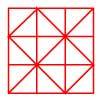
Fractional Triangles
Use the lines on this figure to show how the square can be divided into 2 halves, 3 thirds, 6 sixths and 9 ninths.

Let Us Reflect
Where can you put the mirror across the square so that you can still "see" the whole square? How many different positions are possible?

Halving
These pictures show squares split into halves. Can you find other ways?
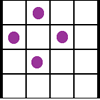
Square Corners
What is the greatest number of counters you can place on the grid below without four of them lying at the corners of a square?

Egyptian Rope
The ancient Egyptians were said to make right-angled triangles using a rope with twelve equal sections divided by knots. What other triangles could you make if you had a rope like this?
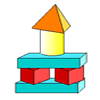
Building with Solid Shapes
We have a box of cubes, triangular prisms, cones, cuboids, cylinders and tetrahedrons. Which of the buildings would fall down if we tried to make them?
Making Sticks
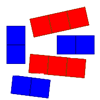
Kimie and Sebastian were making sticks from interlocking cubes and lining them up. Can they make their lines the same length? Can they make any other lines?
Happy Halving
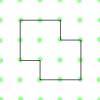
Can you split each of the shapes below in half so that the two parts are exactly the same?
A City of Towers
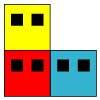
In this town, houses are built with one room for each person. There are some families of seven people living in the town. In how many different ways can they build their houses?
Three Squares
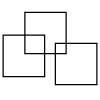
What is the greatest number of squares you can make by overlapping three squares?
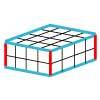
Making Cuboids
Let's say you can only use two different lengths - 2 units and 4 units. Using just these 2 lengths as the edges how many different cuboids can you make?
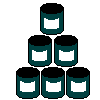
Baked Bean Cans
Is there a best way to stack cans? What do different supermarkets do? How high can you safely stack the cans?
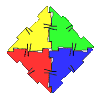
Polydron
This activity investigates how you might make squares and pentominoes from Polydron.
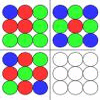
Counter Ideas
Here are some ideas to try in the classroom for using counters to investigate number patterns.
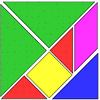
Tangrams
Can you make five differently sized squares from the interactive tangram pieces?