 Links to the NRICH website Home page

30 April (Primary), 1 May (Secondary)
Resources tagged with: Games
There are 140 results
Broad Topics > Physical and digital manipulatives > Games
Seeing Parallelograms
Players take it in turns to choose a dot on the grid. The winner is the first to have four dots that can be joined to form a parallelogram.


Less Is More
Use your knowledge of place value to try to win this game. How will you maximise your score?
Statement Snap
You'll need to know your number properties to win a game of Statement Snap...
Dicey Operations in Line
Who said that adding, subtracting, multiplying and dividing couldn't be fun?

Seeing Squares
Players take it in turns to choose a dot on the grid. The winner is the first to have four dots that can be joined to form a square.

Double or Halve?
Throw the dice and decide whether to double or halve the number. Will you be the first to reach the target?
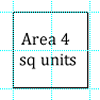
Dicey Perimeter, Dicey Area
In this game for two players, you throw two dice and find the product. How many shapes can you draw on the grid which have that area or perimeter?

Matching Time
Try this matching game which will help you recognise different ways of saying the same time interval.
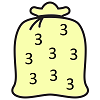
Play to 37
In this game for two players, the idea is to take it in turns to choose 1, 3, 5 or 7. The winner is the first to make the total 37.

Spiralling Decimals
Take turns to place a decimal number on the spiral. Can you get three consecutive numbers?

Incey Wincey Spider
You'll need two dice to play this game against a partner. Will Incey Wincey make it to the top of the drain pipe or the bottom of the drain pipe first?

Nice or Nasty
There are nasty versions of this dice game but we'll start with the nice ones...
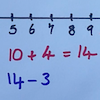
Strike it Out
Use your addition and subtraction skills, combined with some strategic thinking, to beat your partner at this game.
Countdown
Here is a chance to play a version of the classic Countdown Game.

The Remainders Game
Play this game and see if you can figure out the computer's chosen number.

Snap
Try this version of Snap with a friend - do you know the order of the days of the week?
Stop the Clock
This is a game for two players. Can you find out how to be the first to get to 12 o'clock?
Tug Harder!
In this game, you can add, subtract, multiply or divide the numbers on the dice. Which will you do so that you get to the end of the number line first?
Tug of War
Can you use the numbers on the dice to reach your end of the number line before your partner beats you?

First Connect Three
Add or subtract the two numbers on the spinners and try to complete a row of three. Are there some numbers that are good to aim for?
Four Go
This challenge is a game for two players. Choose two of the numbers to multiply or divide, then mark your answer on the number line. Can you get four in a row?

Factors and Multiples Game
A game in which players take it in turns to choose a number. Can you block your opponent?
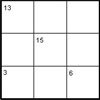
Diagonal Sums Sudoku
Solve this Sudoku puzzle whose clues are in the form of sums of the numbers which should appear in diagonal opposite cells.
Board Block Challenge
Choose the size of your pegboard and the shapes you can make. Can you work out the strategies needed to block your opponent?

The Twelve Pointed Star Game
Have a go at this game which involves throwing two dice and adding their totals. Where should you place your counters to be more likely to win?

Got It
A game for two people, or play online. Given a target number, say 23, and a range of numbers to choose from, say 1-4, players take it in turns to add to the running total to hit their target.
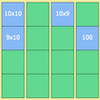
Multiplication Tables - Matching Cards
Practise your tables skills and try to beat your previous best score in this interactive game.

Matching Fractions, Decimals and Percentages
Can you match pairs of fractions, decimals and percentages, and beat your previous scores?


Totality
This is an adding game for two players. Can you be the first to reach the target?
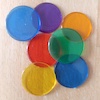
Nim-7
Can you work out how to win this game of Nim? Does it matter if you go first or second?
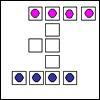
Sliding Game
A shunting puzzle for 1 person. Swop the positions of the counters at the top and bottom of the board.


Mulinello Quadrupio
A game from Italy. Play with a friend and see if you can be the first to get five pieces in a line.
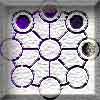
Roundabout
This is a game for 2 players. Each player has 4 counters each, and wins by blocking their opponent's counters. A good follow-on from two stones.

Dominoes
Everthing you have always wanted to do with dominoes! Some of these games are good for practising your mental calculation skills, and some are good for your reasoning skills.
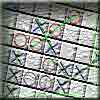
Endless Noughts and Crosses
An extension of noughts and crosses in which the grid is enlarged and the length of the winning line can to altered to 3, 4 or 5.

Sz'kwa
This Chinese game for two players is a simple version of Wei ch'i or Go. Each player has 20 distinctive pieces - try coins, pebbles, shells. You could try marking the board out in wet sand.

Two Stones
This game is known as Pong hau k'i in China and Ou-moul-ko-no in Korea. Find a friend to play or try the interactive version online.
Stop or Dare
All you need for this game is a pack of cards. While you play the game, think about strategies that will increase your chances of winning.

Jumping Reindeer
A game for 1 person to develop stategy and shape and space awareness. 12 counters are placed on a board. Counters are removed one at a time. The aim is to be left with only 1 counter.

Daisy
In this game for two players, take it in turns to shade one petal, or two petals next to each other. Is it better to go first or second?
Line of Four
A game somewhat similar to 'noughts and crosses' on a much larger space.

Football World Cup Simulation
A maths-based Football World Cup simulation for teachers and students to use.
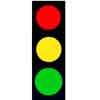
Traffic Lights
The game uses a 3x3 square board. 2 players take turns to play, either placing a red on an empty square, or changing a red to orange, or orange to green. The player who forms 3 of 1 colour in a line wins.