 Links to the NRICH website Home page

30 April (Primary), 1 May (Secondary)
Resources tagged with: Exploring and noticing
There are 47 results
Broad Topics > Thinking mathematically > Exploring and noticing
Rhombus It
Players take it in turns to choose a dot on the grid. The winner is the first to have four dots that can be joined to form a rhombus.



Parallelogram It
Players take it in turns to choose a dot on the grid. The winner is the first to have four dots that can be joined to form a parallelogram.

Standard Index Form Matching
Can you match these calculations in Standard Index Form with their answers?

Square Number Surprises
There are unexpected discoveries to be made about square numbers...

Difference of Two Squares
What is special about the difference between squares of numbers adjacent to multiples of three?

Going to the Cinema
A cinema has 100 seats. Is it possible to fill every seat and take exactly £100?
Steel Cables
Some students have been working out the number of strands needed for different sizes of cable. Can you make sense of their solutions?
Factorising with Multilink
Can you find out what is special about the dimensions of rectangles you can make with squares, sticks and units?

Vector Journeys
Charlie likes to go for walks around a square park, while Alison likes to cut across diagonally. Can you find relationships between the vectors they walk along?

Generating Triples
Sets of integers like 3, 4, 5 are called Pythagorean Triples, because they could be the lengths of the sides of a right-angled triangle. Can you find any more?

Charlie's Delightful Machine
Here is a machine with four coloured lights. Can you develop a strategy to work out the rules controlling each light?

A Little Light Thinking
Here is a machine with four coloured lights. Can you make two lights switch on at once? Three lights? All four lights?

Cyclic Quadrilaterals
Draw some quadrilaterals on a 9-point circle and work out the angles. Is there a theorem?

Countdown Fractions
Here is a chance to play a fractions version of the classic Countdown Game.

Power Countdown
In this twist on the well-known Countdown numbers game, use your knowledge of Powers and Roots to make a target.

The Legacy
Your school has been left a million pounds in the will of an ex- pupil. What model of investment and spending would you use in order to ensure the best return on the money?
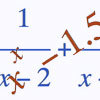
Root Hunter
In this short problem, try to find the location of the roots of some unusual functions by finding where they change sign.

Connect Three
In this game the winner is the first to complete a row of three. Are some squares easier to land on than others?

Sums of Pairs
Jo has three numbers which she adds together in pairs. When she does this she has three different totals: 11, 17 and 22 What are the three numbers Jo had to start with?”

Factors and Multiples Game
A game in which players take it in turns to choose a number. Can you block your opponent?

Magic Potting Sheds
Mr McGregor has a magic potting shed. Overnight, the number of plants in it doubles. He'd like to put the same number of plants in each of three gardens, planting one garden each day. Can he do it?
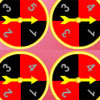
Spinners
How do scores on dice and factors of polynomials relate to each other?

Arithmagons
Can you find the values at the vertices when you know the values on the edges?
Where to Land
Chris is enjoying a swim but needs to get back for lunch. How far along the bank should she land?

Square It
Players take it in turns to choose a dot on the grid. The winner is the first to have four dots that can be joined to form a square.

Painted Cube
Imagine a large cube made from small red cubes being dropped into a pot of yellow paint. How many of the small cubes will have yellow paint on their faces?

Pair Products
Choose four consecutive whole numbers. Multiply the first and last numbers together. Multiply the middle pair together. What do you notice?

Pick's Theorem
Polygons drawn on square dotty paper have dots on their perimeter (p) and often internal (i) ones as well. Find a relationship between p, i and the area of the polygons.

Tiny Nines
What do you notice about these families of recurring decimals?

Shopping Basket
The items in the shopping basket add and multiply to give the same amount. What could their prices be?

Tree Tops
Can you make sense of information about trees in order to maximise the profits of a forestry company?

Attractive Tablecloths
Charlie likes tablecloths that use as many colours as possible, but insists that his tablecloths have some symmetry. Can you work out how many colours he needs for different tablecloth designs?

Marbles in a Box
How many winning lines can you make in a three-dimensional version of noughts and crosses?

What's Possible?
Many numbers can be expressed as the difference of two perfect squares. What do you notice about the numbers you CANNOT make?
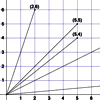
Beelines
Is there a relationship between the coordinates of the endpoints of a line and the number of grid squares it crosses?

How Old Am I?
In 15 years' time my age will be the square of my age 15 years ago. Can you work out my age, and when I had other special birthdays?

Exploring and Noticing - Short Problems
A collection of short Stage 3 and 4 problems on Exploring and Noticing.

Investigating Epidemics
Simple models which help us to investigate how epidemics grow and die out.
Simply Graphs
Look for the common features in these graphs. Which graphs belong together?
Guessing the Graph
Can you suggest a curve to fit some experimental data? Can you work out where the data might have come from?
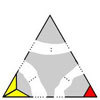
Impossible Triangles?
Which of these triangular jigsaws are impossible to finish?

There's Always One Isn't There
Take any pair of numbers, say 9 and 14. Take the larger number, fourteen, and count up in 14s. Then divide each of those values by the 9, and look at the remainders.

Last Biscuit
Can you find a strategy that ensures you get to take the last biscuit in this game?

Polite Numbers
A polite number can be written as the sum of two or more consecutive positive integers, for example 8+9+10=27 is a polite number. Can you find some more polite, and impolite, numbers?