 Links to the NRICH website Home page

30 April (Primary), 1 May (Secondary)
Resources tagged with: Number theory
There are 23 results
Broad Topics > Properties of numbers > Number theory

A Little Light Thinking
Here is a machine with four coloured lights. Can you make two lights switch on at once? Three lights? All four lights?



Always Perfect
Show that if you add 1 to the product of four consecutive numbers the answer is ALWAYS a perfect square.
Number Rules - OK
Can you produce convincing arguments that a selection of statements about numbers are true?
There's a Limit
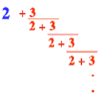
Explore the continued fraction: 2+3/(2+3/(2+3/2+...)) What do you notice when successive terms are taken? What happens to the terms if the fraction goes on indefinitely?
Binomial Coefficients
An introduction to the binomial coefficient, and exploration of some of the formulae it satisfies.

An Introduction to Number Theory
An introduction to some beautiful results in Number Theory.
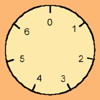
An Introduction to Modular Arithmetic
An introduction to the notation and uses of modular arithmetic
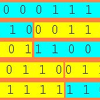
Data Chunks
Data is sent in chunks of two different sizes - a yellow chunk has 5 characters and a blue chunk has 9 characters. A data slot of size 31 cannot be exactly filled with a combination of yellow and blue chunks, explore what sizes near to 31 can, or cannot, be exactly filled.
The Public Key
Find 180 to the power 59 (mod 391) to crack the code. To find the secret number with a calculator we work with small numbers like 59 and 391 but very big numbers are used in the real world for this.

Ordered Sums
Let a(n) be the number of ways of expressing the integer n as an ordered sum of 1's and 2's. Let b(n) be the number of ways of expressing n as an ordered sum of integers greater than 1. (i) Calculate a(n) and b(n) for n<8. What do you notice about these sequences? (ii) Find a relation between a(p) and b(q). (iii) Prove your conjectures.

Powerful Properties
Yatir from Israel wrote this article on numbers that can be written as $ 2^n-n $ where n is a positive integer.
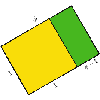
About Pythagorean Golden Means
What is the relationship between the arithmetic, geometric and harmonic means of two numbers, the sides of a right angled triangle and the Golden Ratio?


Sums of Squares and Sums of Cubes
An account of methods for finding whether or not a number can be written as the sum of two or more squares or as the sum of two or more cubes.
Modulus Arithmetic and a Solution to Differences
Peter Zimmerman, a Year 13 student at Mill Hill County High School in Barnet, London wrote this account of modulus arithmetic.

Really Mr. Bond
115^2 = (110 x 120) + 25, that is 13225 895^2 = (890 x 900) + 25, that is 801025 Can you explain what is happening and generalise?
Never Prime
If a two digit number has its digits reversed and the smaller of the two numbers is subtracted from the larger, prove the difference can never be prime.

Novemberish
a) A four digit number (in base 10) aabb is a perfect square. Discuss ways of systematically finding this number. (b) Prove that 11^{10}-1 is divisible by 100.


Diophantine N-tuples
Can you explain why a sequence of operations always gives you perfect squares?
Pythagorean Golden Means
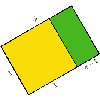
Show that the arithmetic mean, geometric mean and harmonic mean of a and b can be the lengths of the sides of a right-angles triangle if and only if a = bx^3, where x is the Golden Ratio.

Euler's Squares
Euler found four whole numbers such that the sum of any two of the numbers is a perfect square...