 Links to the NRICH website Home page

30 April (Primary), 1 May (Secondary)
Resources tagged with: Programming
There are 19 results
Broad Topics > Physical and digital manipulatives > Programming
Fibs
The well known Fibonacci sequence is 1 ,1, 2, 3, 5, 8, 13, 21.... How many Fibonacci sequences can you find containing the number 196 as one of the terms?


Flower Power
Create a symmetrical fabric design based on a flower motif - and realise it in Logo.

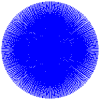
Making Moiré Patterns
Moiré patterns are intriguing interference patterns. Create your own beautiful examples using LOGO!
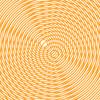
Programming: Moiré Patterns
We need computer programmers! Logo is a great entry-level programming language - and you can create stunning graphics while you learn.
First Forward Into Logo 3: Repeat REPEAT
More Logo for beginners. Now learn more about the REPEAT command.
First Forward Into Logo 12: Puzzling Sums
Can you puzzle out what sequences these Logo programs will give? Then write your own Logo programs to generate sequences.
First Forward Into Logo 11: Sequences
This part introduces the use of Logo for number work. Learn how to use Logo to generate sequences of numbers.
First Forward Into Logo 8: More about Variables
Write a Logo program, putting in variables, and see the effect when you change the variables.

First Forward Into Logo 5: Pen Up, Pen Down
Learn about Pen Up and Pen Down in Logo
First Forward Into Logo 9: Stars
Turn through bigger angles and draw stars with Logo.
First Forward Into Logo 7: Angles of Polygons
More Logo for beginners. Learn to calculate exterior angles and draw regular polygons using procedures and variables.
First Forward Into Logo 6: Variables and Procedures
Learn to write procedures and build them into Logo programs. Learn to use variables.

First Forward Into Logo 4: Circles
Learn how to draw circles using Logo. Wait a minute! Are they really circles? If not what are they?
First Forward Into Logo 2: Polygons
This is the second in a twelve part introduction to Logo for beginners. In this part you learn to draw polygons.
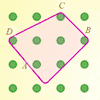
Elastic Maths
How do you write a computer program that creates the illusion of stretching elastic bands between pegs of a Geoboard? The answer contains some surprising mathematics.

First Forward Into Logo 10: Count up - Count Down
What happens when a procedure calls itself?

First Forward Into Logo 1: Square Five
A Short introduction to using Logo. This is the first in a twelve part series.
Helen's Conjecture
Helen made the conjecture that "every multiple of six has more factors than the two numbers either side of it". Is this conjecture true?