Links to the NRICH website Home page

30 April (Primary), 1 May (Secondary)
Resources tagged with: History
There are 52 results
Broad Topics > Cross-curricular contexts > History
All about Infinity
Infinity is not a number, and trying to treat it as one tends to be a pretty bad idea. At best you're likely to come away with a headache, at worse the firm belief that 1 = 0. This article discusses the different types of infinity.
Ancient Astronomical Terms
Some explanations of basic terms and some phenomena discovered by ancient astronomers
History of Trigonometry - Part 2
The second of three articles on the History of Trigonometry.
The History of Trigonometry- Part 1
The first of three articles on the History of Trigonometry. This takes us from the Egyptians to early work on trigonometry in China.

The Development of Algebra - 2
This is the second article in a two part series on the history of Algebra from about 2000 BCE to about 1000 CE.
The Development of Algebra - 1
This is the first of a two part series of articles on the history of Algebra from about 2000 BCE to about 1000 CE.
Geometry: A History from Practice to Abstraction
This article gives a brief history of the development of Geometry.
The Four Colour Theorem
The Four Colour Conjecture was first stated just over 150 years ago, and finally proved conclusively in 1976. It is an outstanding example of how old ideas can be combined with new discoveries. prove a mathematical theorem.

From A Random World to a Rational Universe
In the time before the mathematical idea of randomness was discovered, people thought that everything that happened was part of the will of supernatural beings. So have things changed?

A Brief History of Time Measurement
Noticing the regular movement of the Sun and the stars has led to a desire to measure time. This article for teachers and learners looks at the history of humanity's need to measure things.
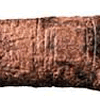
Ishango Bone
Can you decode the mysterious markings on this ancient bone tool?


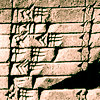
Babylon Numbers
Can you make a hypothesis to explain these ancient numbers?
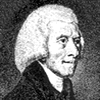
The History of Negative Numbers
This article -useful for teachers and learners - gives a short account of the history of negative numbers.
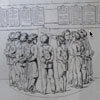
Maths in the Victorian Classroom
What was it like to learn maths at school in the Victorian period? We visited the British Schools Museum in Hitchin to find out.
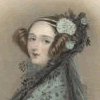
Women in Maths
Most stories about the history of maths seem to be about men. Here are some famous women who contributed to the development of modern maths and prepared the way for generations of female mathematicians.
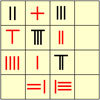

Shaping the Universe II - the Solar System
The second in a series of articles on visualising and modelling shapes in the history of astronomy.
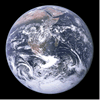
Shaping the Universe I - Planet Earth
This article explores ths history of theories about the shape of our planet. It is the first in a series of articles looking at the significance of geometric shapes in the history of astronomy.

How Long Is the Cantor Set?
Take a line segment of length 1. Remove the middle third. Remove the middle thirds of what you have left. Repeat infinitely many times, and you have the Cantor Set. Can you find its length?
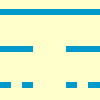
The Cantor Set
Take a line segment of length 1. Remove the middle third. Remove the middle thirds of what you have left. Repeat infinitely many times, and you have the Cantor Set. Can you picture it?
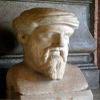
Pythagoras
Pythagoras of Samos was a Greek philosopher who lived from about 580 BC to about 500 BC. Find out about the important developments he made in mathematics, astronomy, and the theory of music.

The Dangerous Ratio
This article for pupils and teachers looks at a number that even the great mathematician, Pythagoras, found terrifying.
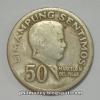
History of Money
If you would like a new CD you would probably go into a shop and buy one using coins or notes. (You might need to do a bit of saving first!) However, this way of paying for the things you want did not always exist. Find out more ...
Coordinates and Descartes
Have you ever wondered how maps are made? Or perhaps who first thought of the idea of designing maps? We're here to answer these questions for you.
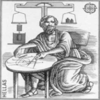
Eureka!
Read this article to find out about the discoveries and inventions of Archimedes.
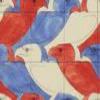
Maurits Cornelius Escher
Have you ever noticed how mathematical ideas are often used in patterns that we see all around us? This article describes the life of Escher who was a passionate believer that maths and art can be intertwined.

Shaping up with Tessellations
This article describes the scope for practical exploration of tessellations both in and out of the classroom. It seems a golden opportunity to link art with maths, allowing the creative side of your children to take over.
All Is Number
Read all about Pythagoras' mathematical discoveries in this article written for students.
Going Places with Mathematicians
This article looks at the importance in mathematics of representing places and spaces mathematics. Many famous mathematicians have spent time working on problems that involve moving and mapping things.
Measure for Measure
This article, written for students, looks at how some measuring units and devices were developed.
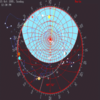
A History of Astronomy
Astronomy grew out of problems that the early civilisations had. They needed to solve problems relating to time and distance - both mathematical topics.
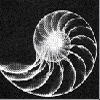
Leonardo of Pisa and the Golden Rectangle
Leonardo who?! Well, Leonardo is better known as Fibonacci and this article will tell you some of fascinating things about his famous sequence.

Circles, Circles Everywhere
This article for pupils gives some examples of how circles have featured in people's lives for centuries.

History of Fractions
Who first used fractions? Were they always written in the same way? How did fractions reach us here? These are the sorts of questions which this article will answer for you.
From One Shape to Another
Read about David Hilbert who proved that any polygon could be cut up into a certain number of pieces that could be put back together to form any other polygon of equal area.
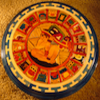
Calendars
Calendars were one of the earliest calculating devices developed by civilizations. Find out about the Mayan calendar in this article.
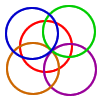
Pi, a Very Special Number
Read all about the number pi and the mathematicians who have tried to find out its value as accurately as possible.
The Moving Planets
Mathematics has always been a powerful tool for studying, measuring and calculating the movements of the planets, and this article gives several examples.
Clever Carl
What would you do if your teacher asked you add all the numbers from 1 to 100? Find out how Carl Gauss responded when he was asked to do just that.
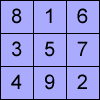
An Introduction to Magic Squares
Find out about Magic Squares in this article written for students. Why are they magic?!
Fibonacci's Three Wishes 2
Second of two articles about Fibonacci, written for students.

St Ives
As I was going to St Ives, I met a man with seven wives. Every wife had seven sacks, every sack had seven cats, every cat had seven kittens. Kittens, cats, sacks and wives, how many were going to St Ives?
Weigh to Go
This article for teachers recounts the history of measurement, encouraging it to be used as a spring board for cross-curricular activity.
History of Measurement
This article tells you all about some early ways of measuring as well as methods of measuring tall objects we can still use today. You can even have a go at some yourself!
History of Morse
This short article gives an outline of the origins of Morse code and its inventor and how the frequency of letters is reflected in the code they were given.
The Secret World of Codes and Code Breaking
When you think of spies and secret agents, you probably wouldn’t think of mathematics. Some of the most famous code breakers in history have been mathematicians.