Links to the University of Cambridge website
 Links to the NRICH website Home page

Links to the NRICH website Home page
Nurturing young mathematicians: teacher webinars
30 April (Primary), 1 May (Secondary)
30 April (Primary), 1 May (Secondary)
Secondary Students
Welcome to the Secondary Student Homepage
Latest Feature

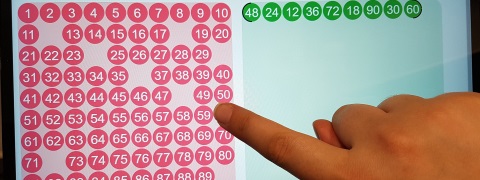
This task, and its accompanying interactivity, challenges you to use your reasoning skills and your understanding of the properties of numbers
See all problems Open for Solution
See all Past Features
News and Recent Solutions

See if your solutions to our recent problems have been published
Read about how to get your solution featured
Sign up to our newsletter
Activities and Games
Explore our huge archive of resources
Browse Maths by topic
Try our Short Problems
Play Games
Go Wild
Be a Mathematician

Explore these collections to develop your mathematical skills
Thinking Mathematically
Articles and books
STEP Support Programme