 Links to the NRICH website Home page

30 April (Primary), 1 May (Secondary)
Games - Upper Primary
Odds and Threes


A game for 2 people using a pack of cards Turn over 2 cards and try to make an odd number or a multiple of 3.
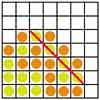
Low Go
A game for 2 players. Take turns to place a counter so that it occupies one of the lowest possible positions in the grid. The first player to complete a line of 4 wins.
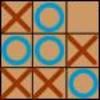
Noughts and Crosses
A game for two people that everybody knows. If you play correctly you never lose!
Winning Lines
An article for teachers and pupils that encourages you to look at the mathematical properties of similar games.
Asteroid Blast
A game for 2 people. Use your skills of addition, subtraction, multiplication and division to blast the asteroids.

Gotcha
A game for 2 players. This could be played outside with people instead of counters. Try to trap or escape from your opponent.

Down to Nothing
A game for 2 or more people. Starting with 100, subratct a number from 1 to 9 from the total. You score for making an odd number, a number ending in 0 or a multiple of 6.

Part the Piles
Try to stop your opponent from being able to split the piles of counters into unequal numbers. Can you find a strategy?
Put Yourself in a Box
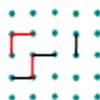
A game for 2 players. Given a board of dots in a grid pattern, players take turns drawing a line by connecting 2 adjacent dots. Your goal is to complete more squares than your opponent.

Counter Roundup
A game for 1 or 2 people. Use the interactive version, or play with friends. Try to round up as many counters as possible.

Dicey
A game has a special dice with a colour spot on each face. These three pictures show different views of the same dice. What colour is opposite blue?
Flip Flop - Matching Cards
Practise your number bonds whilst improving your memory in this matching pairs game.
Game of PIG - Sixes
Can you beat Piggy in this simple dice game? Can you figure out Piggy's strategy, and is there a better one?