

National Flags


This problem explores the shapes and symmetries in some national flags.
Problem
During an Olympic Games many national flags are on display.
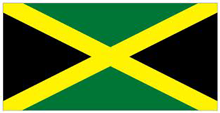
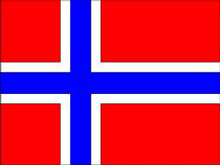
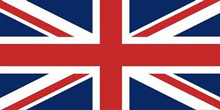
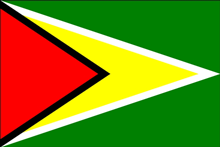
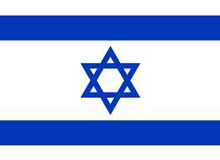
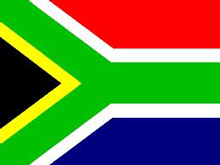
Here's a chance to investigate some of them.
Pick a flag and investigate some of the following:
What shapes can you see in it? Can you describe them and their angles?
Does the flag have any lines of reflective symmetry, if so how many lines?
Can you find any pairs of parallel lines? If so mark them on your flag.
Are there any lines perpendicular to one another?
Can you find a way to classify the shapes in your flag?
Now try with another flag.
Getting Started
What shapes can you see in your flag?
Are the shapes regular or irregular?
Can you describe their angles? Can you estimate them? Can you measure them?
Does the flag have any lines of reflective symmetry?
Does it have rotational symmetry?
Does it matter which way up you hang it?
Can you find any parallel lines........ or perpendicular lines?
Student Solutions
We had some blogging - the most from one school yet, coming from Brynmill
School in Swansea, Wales. These and others can be viewed here at our Infinities
Randley School in England sent in a number of observations from their children, Olivia (maybe there were two Olivias?), Anna, Jamie and Harvi. Jamie's was as follows:
What I found out is that the Israeli flag had $6$ triangles, $1$ pentagon, but the star was actually $2$ triangles on the top of it. It has $8$ right angles and is mostly white. A bit of it is blue, the blue bit is $2$ rectangles(very long ones) the only colours in the israeli flag are blue and white.
Tom and Luke from Redgate School in England noticed things about the Jamaican flag as follows;
$4$ Triangles, $2$ acute, $2$ obtuse.
$2$ lines of symmetry.
No parrallel lines and no perpendicular ones either.
Yes, it is sometimes worthwhile mentioning what isn't there as well!
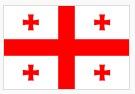
That's the flag that Year $5$ from St. John's found, it's the flag from Georgia, they examined it and emailed in saying;
I can see $5$ crosses and $5$ rectangles.I can see $2$ lines of symmetry. I can see $16$ right angles. I can see $4$ pairs of parallel lines. There are perpendicular lines. There are are $5$ dodecagons and $5$ rectangles.
So, well done all of you and when the Olympic Games start you may see more flags and notice more new things - let us know.
Teachers' Resources
National Flags
During an Olympic Games many national flags are on display.
Here's a chance to investigate some of them.
Pick a flag and investigate some of the following:
What shapes can you see in it? Can you describe them and their angles?
Does the flag have any lines of reflective symmetry, if so how many lines?
Can you find any pairs of parallel lines? If so mark them on your flag.
Are there any lines perpendicular to one another?
Can you find a way to classify the shapes in your flag?
Now try with another flag.
Using NRICH Tasks Richly describes ways in which teachers and learners can work with NRICH tasks in the classroom.
Why do this problem?
This problem gives children the opportunity to identify, visualise, and describe the characteristics and properties of 2D shapes in the context of a meaningful real life setting. It also provides experience of classifying and measuring angles, and identifying lines of symmetry.
Possible approach
With the children working in pairs ask one person to pick a 2D shape from a set of shapes and describe it to their partner without them seeing it. The second person must then draw the shape they think it is.
Next let the children choose their own flag and find ways in which to investigate it. Templates of the flags can be downloaded to enable the children to mark and measure angles, and identify parallel and perpendicular lines. Mirrors and tracing paper would be useful.
Key questions
What shapes can you see in your flag? Are they regular or irregular?
Can you describe their angles? Can you estimate them? Measure them?
Does the flag have any lines of reflective symmetry?
Can you find any parallel and/or perpendicular lines?
Possible extension
Children could look at the order of rotational symmetry of their flags, and work out areas of different shapes given certain dimensions.
Possible support
Children could use a set of 2D shapes to help them identify the shapes on their flags and their angles.