

Half Time

 1 out of 3
What could the half time scores have been in these Olympic hockey matches?
Problem
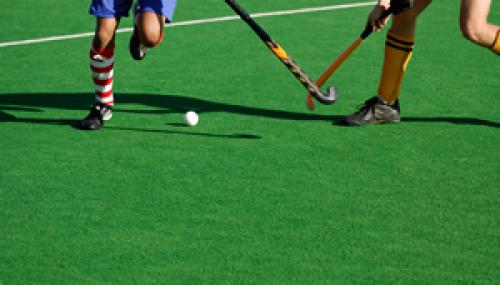
When Spain played Belgium in the preliminary round of the men's hockey competition in the 2008 Olympics, the final score was 4 - 2.
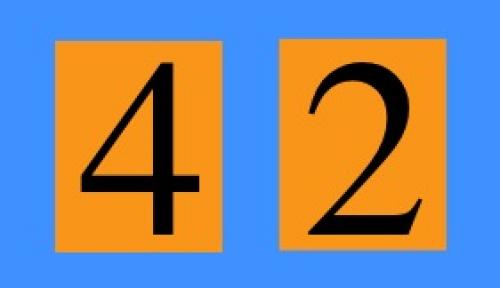
What could the half time score have been?
Can you find all the possible half time scores?
How will you make sure you don't miss any out?
In the final of the men's hockey in the 2000 Olympics, the Netherlands played Korea. The final score was a draw: it was 3 - 3 and they had to take penalties.
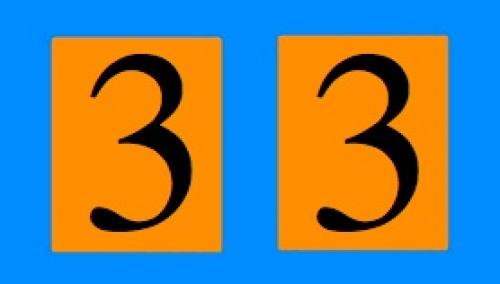
Can you find all the possible half time scores for this match?
Getting Started
What could the score have been if Spain hadn't scored any goals by half time?
What could the score have been if Spain had scored one goal by half time ...?
Student Solutions
We had over $60$ correct solutions sent in, a number from these schools in England; Longcroft School and Performing Arts College, Midgley School, Woodfield School, Egerton Primary and Roundwood Park School. From other countries we had replies from Armidale City Public School, Australia; Independent Bonn International School, Germany and St. Michael's Wales.
From Years $3$ and $4$ St. Peter's CEVC we had this superb submission;
We started with the $4.2$ final score, and in pairs tried to find all the possible half-time scores. We wrote the scores on post-it notes and shared our scores with each other. We then tried to find a way of making sure that we had found all the possible ways. We started at $0.0$ and worked our way up to the final score. (Sophia and Daniel said it was like sorting decimals - smallest to largest.)
We then tried the $3.3$ full time score doing exactly the same. Once we had done that we decided that there must be a way of working out all the possible half-time scores without writing them all down. After a lot of talking about it we finally found out that you have to add 1 to each number (score) and then multiply them together. e.g $ (4+1) X (2+1) = 15$.
and so for the second part they write;
$(3+1) x (3+1) = 16$ or you could say h+1 x a+1
We tried this out on our friends. Grace, Abbie, Haley, Chloe, Lauren, Sophia Crane and Daniel.
Rhys from Longcroft School sent in the following;
All posible results for Spain vs Belgium: $1-1,2-2,3-2,4-2,0-0,0-1,0-2,1-0,2-0,3-0,4-0,4-1,3-1,2-1,1-2 $
All these solution are posible as you don't just have to think about the score Spain got, you can consider what score Belgium got, so example $0-2$, this makes sense as Belgium are the away team so their score goes on the left. The solutions were hard to work out, but all you had to do was work out the posible scores to Spain at half time and see if they were possible, then you could work all the possible scores to Belgium, for all we know it could of been $4-2$ at half time. That was my range of solutions for the Spain vs Belgium hockey half time challenge, hope you like it.
Chris from Seymour School wrote;
You have to start systematically so you start with $0-0$ then $1-0 2-0 3-0 4-0 0-1$ and $0-2$ because the winning team got $4$ we can't go any higher so we have to $1-1 2-1 3-1 4-1$ now we done that the losing side got $2$ so we can do $1-2 2-2 3-2 4-2$ and we can't do any more. With the $2000$ one we can do exactly the same so $0-0 1-0 2-0 3-0 0-1 0-2$ and $0-3$ as you know that the score was $3$ all so the highest numbers $3$ so know we can do $1-1 2-1 3-1 1-2$ and $1-3$ so know we done all those we can do $2-2 3-2$ and $2-3$ and we can finish it off with $3-3.$
Well done all of you it was very impressive!
Teachers' Resources
Using NRICH Tasks Richly describes ways in which teachers and learners can work with NRICH tasks in the classroom.
Why do this problem?
This challenge invites pupils to develop a systematic way of working and offers the opportunity for discussion in pairs, small groups and the whole class. For some learners, having a 'real' context might provide motivation to solve the problem.
Possible approach
Of course, you may wish to introduce this problem in the context of the scores of a local event, rather than the Olympics. This may help many pupils engage in the solving of the problem.
Whatever the context, at first you could invite pupils to guess what the half time score was to the match. Take a few suggestions and then ask them to try and find all the possibilities. Give time for pupils to work in pairs on the task and look out for those children who are beginning to work in a systematic way.
After a suitable length of time, draw the whole group together and ask them how they are making sure they don't miss out any possibilities. You may wish to ask certain pairs to share their ways of working with the whole group. It might be handy to suggest that each different possibility is written on a separate strip of paper as this might aid later discussions.
Give them longer to work on the problem then bring everyone together once more to discuss findings. You could ask each pair how many different possible scores they think there are - they are unlikely to agree! This is where having the scores written on strips is useful as you can stick them on the board, or ask members of the class to hold them, then invite everyone to sort them or re-order them. In this way, a system is imposed on the scores and any missing ones can be identified quickly.
You can then challenge pairs to find the possibilities for the 3 - 3 match, using a similar system. The experience of working on the 4 - 2 result all together should give them more confidence to tackle the second match in their pairs.
Key questions
How do you know that may have been a half time score?
How can you be sure that you have found ALL the possible half time scores?
Suppose the final score was a draw, what then?
Possible extension
You could ask "If there are 24 possible different half time scores, what could the final score have been?".
Possible support
Some pupils may prefer to start with games where there are fewer goals, for example, 0 - 1, 1 - 0, 1 - 1 etc so that there are fewer possible half time scores.