Links to the University of Cambridge website
 Links to the NRICH website Home page

Links to the NRICH website Home page
Nurturing young mathematicians: teacher webinars
30 April (Primary), 1 May (Secondary)
30 April (Primary), 1 May (Secondary)
Shrink
Age 14 to 16
Challenge Level 

You may also like
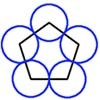
Polycircles
Show that for any triangle it is always possible to construct 3 touching circles with centres at the vertices. Is it possible to construct touching circles centred at the vertices of any polygon?

Bendy Quad
Four rods are hinged at their ends to form a convex quadrilateral. Investigate the different shapes that the quadrilateral can take. Be patient this problem may be slow to load.
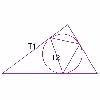
Triangle Incircle Iteration
Keep constructing triangles in the incircle of the previous triangle. What happens?