

Complete the Square

Complete the squares - but be warned some are trickier than they look!
Problem
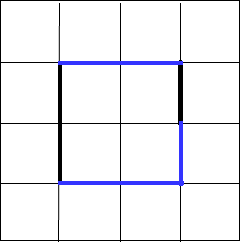
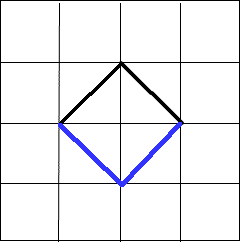
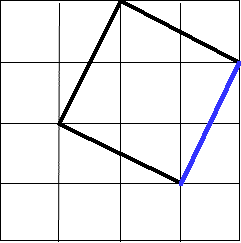
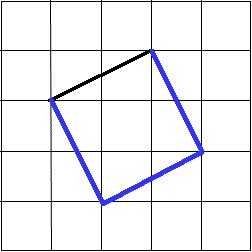
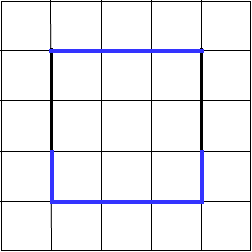
Can you complete these squares?


You might like to print off this sheet of the squares to complete.
This activity has been adapted from one of BEAM's free Maths of the Month resources, which unfortunately are no longer available.
Getting Started
What do you know about squares? Can this help you finish the diagrams?
It might be easier to print off this sheet and then use a pencil and ruler to complete the squares.
Student Solutions
Jamie from Great Hilton High School sent in some pictures of his solutions. He says
When trying to make a square, there are 2 rules to follow, which are:
1. All the sides need to be the same size.
2. There must be 4 perpendicular angles (or right angles).
To complete the squares, see how many grid squares 1 line takes up and rotate the line 90 degrees. Keep doing this until you get a full square.
Teachers' Resources
Complete the Square
Can you complete these squares?
You might like to print off this sheet of the squares to complete.
This activity has been adapted from one of BEAM's free Maths of the Month resources, which unfortunately are no longer available.
Using NRICH Tasks Richly describes ways in which teachers and learners can work with NRICH tasks in the classroom.
Why do this problem?
Possible approach
Key questions
Possible extension